· FODMAP Diet Guide · guides · 10 min read
Constipated on the Low FODMAP Diet? Here's What Actually Works
Constipated on the low FODMAP diet? This guide shows you exactly which high-fiber foods, supplements, and strategies relieve IBS-C - without undoing your progress.
You started the low FODMAP diet to feel better. Instead, you haven’t had a proper bowel movement in days. Your stomach feels like a rock, you’re bloated despite following every rule, and you’re starting to wonder if this diet is making things worse. Here’s the frustrating paradox: the elimination phase removes many of the best fiber sources your gut relies on — wheat, legumes, and most fruits. For people with IBS-C, this creates exactly the problem you were trying to solve. But quitting the diet isn’t the answer. The right food choices and proper hydration will keep your bowels moving while you stay on track.
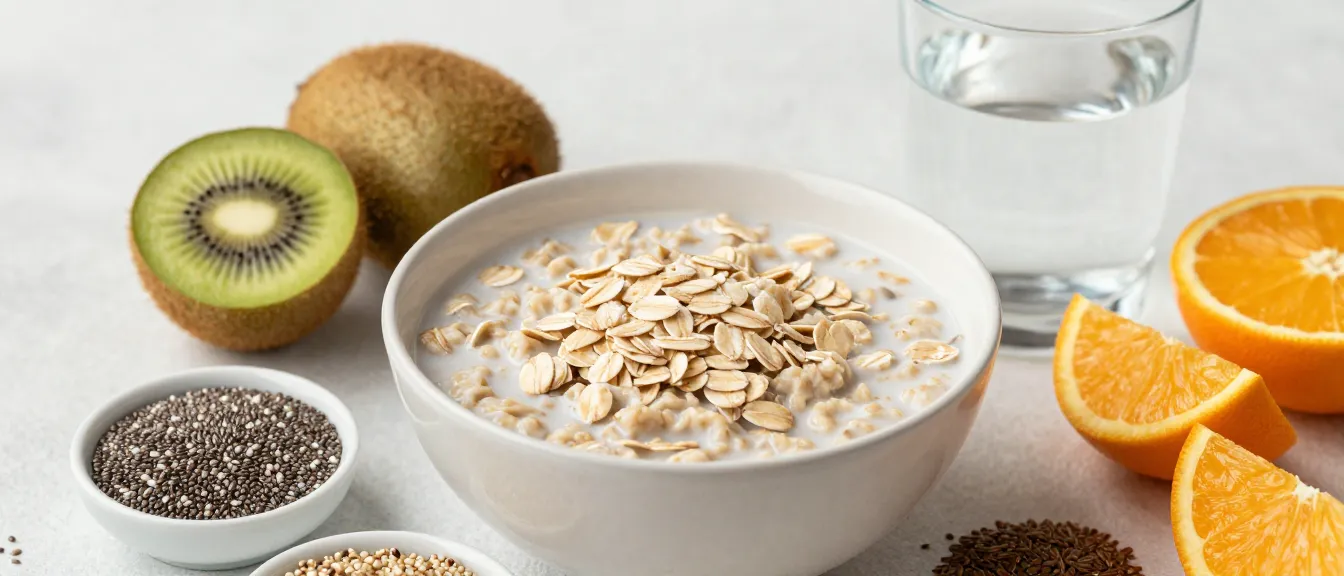
Quick summary: Best foods: Kiwi (2 daily), oats, chia seeds, carrots, quinoa. Best supplement: Psyllium husk or PHGG (start with 1 tsp). Critical rule: Add fiber slowly (5g per week). Non-negotiable: 8+ glasses of water daily. Timeline: 1-2 weeks for noticeable improvement.
Why the Low FODMAP Diet Can Cause Constipation
Many high FODMAP foods are excellent fiber sources:
- Wheat bran and whole grains (fructans — a type of carbohydrate chain)
- Legumes like beans and lentils (GOS — galacto-oligosaccharides, a fermentable sugar)
- Apples, pears, and stone fruits (fiber + fructose/sorbitol)
- Asparagus, artichokes, and cauliflower (fructans)
For a full breakdown of what you can and can’t eat, see our low FODMAP food list.
Removing these foods during the FODMAP diet can slash your fiber intake, which leads to:
- Slower intestinal transit time
- Harder, drier stools
- Less frequent bowel movements
- Increased straining
The fix isn’t abandoning the low FODMAP diet — it’s choosing the right high-fiber low FODMAP foods and supplements.
Understanding Fiber Types
Not all fiber affects constipation the same way.
Soluble Fiber
What it does:
- Dissolves in water to form a gel
- Softens stool
- Feeds beneficial gut bacteria
- Generally well-tolerated
Best for: Most people with IBS-C, especially those with sensitive systems
Insoluble Fiber
What it does:
- Doesn’t dissolve in water
- Adds bulk to stool
- Speeds transit through intestines
- Can be irritating in large amounts
Best for: People whose constipation is primarily due to slow transit
Important: You need BOTH types of fiber, but the ratio depends on your individual needs. Most people with IBS-C benefit from emphasizing soluble fiber.
High-Fiber Low FODMAP Foods
Fiber-Rich Grains & Seeds
Oats (Excellent Source):
- 1/2 cup dry oats = ~4g fiber
- Contains beta-glucan (a soluble fiber that forms a gel in the gut, aiding digestion)
- Very gentle on digestion
- Can be eaten daily
Serving ideas:
- Traditional oatmeal with lactose-free milk
- Overnight oats with strawberries
- Oat-based granola (check ingredients)
Quinoa:
- 1 cup cooked = ~5g fiber
- Contains both soluble and insoluble fiber
- Complete protein source
- Versatile for meals
Serving ideas:
- Quinoa bowls with protein and vegetables
- Quinoa salad
- Side dish instead of rice
Brown Rice:
- 1 cup cooked = ~3.5g fiber
- More fiber than white rice
- Well-tolerated by most
- Unlimited serving size
Rice Bran:
- 2 tablespoons = ~3g fiber
- Add it to smoothies, oatmeal, or baked goods
- Low FODMAP certified
- Easy way to boost fiber
Oat Bran:
- 2 tablespoons = ~2g fiber
- Rich in soluble fiber
- Mix into cereals, smoothies, or yogurt
- Low FODMAP in small amounts
Chia Seeds (Powerful Fiber Source):
- 2 tablespoons = ~10g fiber
- Absorbs water to form gel (great for constipation)
- Rich in omega-3 fatty acids
- Drink at least 16oz of water with every serving of chia seeds
Serving ideas:
- Chia pudding with lactose-free milk
- Add to smoothies
- Sprinkle on oatmeal or yogurt
- Mix into gluten-free baking
Ground Flaxseeds:
- 2 tablespoons = ~4g fiber
- Both soluble and insoluble fiber
- Natural laxative properties
- Grind them before eating (whole seeds pass through undigested)
Serving ideas:
- Mix into oatmeal
- Add to smoothies
- Mix into lactose-free yogurt
- Use in baking
Important: Start with 1 tablespoon and gradually increase to avoid bloating.
Fiber-Rich Vegetables
Carrots (Cooked):
- 1 cup cooked = ~5g fiber
- Unlimited serving size
- Gentler when cooked
- Contains soluble fiber (pectin)
Sweet Potato (in limited amounts):
- 1/2 cup (70g) = ~2g fiber
- Low FODMAP in small portions
- Contains both fiber types
- Rich in nutrients
Note: Larger portions contain mannitol, so stick to 1/2 cup servings.
Zucchini:
- 1/3 cup = ~1g fiber
- Very gentle on digestion
- Easy to eat in larger quantities through the day
- Versatile in cooking
Parsnips:
- 1/2 cup cooked = ~3g fiber
- Root vegetable similar to carrots
- Good fiber content
- Naturally sweet
Pumpkin:
- 1/4 cup canned = ~2g fiber
- Low FODMAP in limited amounts
- Works in both sweet and savory dishes
- Great for smoothies or baking
Green Beans:
- 15 beans = ~2g fiber
- Eat them multiple times per day for cumulative fiber
- Good source of fiber and nutrients
- Cooked is easier to digest
Kale:
- 1 cup chopped = ~2.5g fiber
- Unlimited in cooked form
- Nutrient-dense
- More tender when cooked
Spinach:
- 1 cup raw or unlimited cooked = ~4g fiber (cooked)
- Becomes more concentrated when cooked
- Very gentle on digestion
- Rich in magnesium (helps with motility)
Fiber-Rich Fruits
Kiwi (The Standout for Constipation):
- 2 small kiwis = ~4g fiber
- Contains actinidin (a natural enzyme that breaks down protein and stimulates bowel movements)
- Research shows kiwis specifically help IBS-C
- Eat daily for best results
The research: Clinical trials show that eating 2 kiwis daily significantly improves bowel frequency and reduces straining in people with constipation.
Strawberries:
- 10 medium berries = ~3g fiber
- Low FODMAP in generous portions
- Seeds provide additional fiber
- Can be eaten daily
Raspberries:
- 10 berries (60g) = ~4g fiber
- Seeds provide insoluble fiber
- Higher fiber than most berries
- Great for yogurt or oatmeal
Oranges:
- 1 medium orange = ~3g fiber
- Contains soluble fiber (pectin)
- Hydrating
- Natural enzymes aid digestion
Blueberries:
- 20 berries (28g) = ~1g fiber
- Lower per serving but you can eat them throughout the day
- Rich in antioxidants
- Gentle on digestion
Banana (Firm):
- 1 medium = ~3g fiber
- Green/firm bananas are better for constipation
- Contains resistant starch
- Easy to digest
Note: Overripe bananas can worsen constipation for some people.
Passion Fruit:
- 1 fruit = ~2g fiber
- Seeds are edible and fiber-rich
- Add to yogurt or smoothies
Nuts and Seeds (in appropriate portions)
Almonds:
- 10 almonds = ~1.5g fiber
- Contains both fiber types
- Watch your portion size (FODMAP stacking)
- Good for snacking
Walnuts:
- 10 halves = ~2g fiber
- Contains omega-3s
- Good for brain and gut health
- Limited portions
Peanuts:
- 32 peanuts = ~2g fiber
- Natural peanut butter works too (2 tablespoons)
- Versatile snack option
Pumpkin Seeds:
- 2 tablespoons = ~1.5g fiber
- Add to salads, oatmeal
- Rich in magnesium (helps motility)
Sunflower Seeds:
- 2 tablespoons = ~2g fiber
- Easy to incorporate into meals
- Good protein source
Already know your fiber sources? Use our FODMAP food database to double-check serving sizes and FODMAP ratings before adding new foods to your plan.
Best Fiber Supplements When Food Isn’t Enough
When food alone isn’t cutting it, supplements can bridge the gap.
Psyllium Husk (Most Popular)
Benefits:
- 1 tablespoon = ~5g fiber
- Bulk-forming laxative
- Not habit-forming
- Takes effect within 12-72 hours
How to use:
- Start with 1 teaspoon
- Mix in 8oz water, drink immediately
- Follow with another glass of water
- Gradually increase to 1-2 tablespoons daily
- Take 2 hours away from medications
Brands: Metamucil (unflavored), Konsyl
Important: Drink a full glass of water immediately after taking psyllium. Skip this step and you’ll make constipation worse.
Partially Hydrolyzed Guar Gum (PHGG)
Benefits:
- Prebiotic fiber
- Helps both constipation and diarrhea
- Very well-tolerated
- Dissolves completely in liquids
- Certified low FODMAP
How to use:
- Start with 1 teaspoon
- Mix into any beverage
- Gradually increase to 1-2 tablespoons daily
- Take with meals
Brands: Sunfiber, Regular Girl
What makes PHGG effective: It acts as a prebiotic that feeds beneficial gut bacteria while improving stool consistency — addressing two problems at once.
Acacia Fiber (Gum Arabic)
Benefits:
- 100% soluble fiber
- Extremely gentle
- Prebiotic properties
- Low FODMAP certified
- Rarely causes gas or bloating
How to use:
- Start with 1 teaspoon
- Mix into water, smoothies, or oatmeal
- Gradually increase to 1-2 tablespoons daily
Brands: Heather’s Tummy Fiber
Wheat Dextrin
Benefits:
- Soluble fiber
- Tasteless and dissolves easily
- Low FODMAP
- Gentle on digestion
How to use:
- Follow package directions
- Mix into beverages or soft foods
- Take with meals
Brands: Benefiber (ensure it’s 100% wheat dextrin)
Note: Despite containing “wheat,” wheat dextrin is processed to remove FODMAPs.
Methylcellulose
Benefits:
- Synthetic fiber (not from food)
- Very gentle
- Doesn’t ferment (no gas)
- Low FODMAP
How to use:
- Follow package directions carefully
- Take with a full glass of water
Brands: Citrucel
What to AVOID
Inulin/Chicory Root:
- Very high in fructans
- Will trigger IBS symptoms
- Common in “fiber supplements”
Wheat Bran:
- May worsen pain and bloating in IBS
- High in fructans
Hydration: The Missing Piece
Fiber without adequate water makes constipation WORSE.
How Much Water?
Minimum: 8 cups (64oz) daily Better: Half your body weight in ounces
- Example: 150 lbs person = 75 oz water
Tips for Drinking More Water
- Start your day with 16oz water
- Drink a glass before each meal
- Carry a reusable water bottle
- Set phone reminders
- Add lemon or lime for flavor
- Drink peppermint or ginger tea (counts toward hydration)
Signs You’re Drinking Enough
- Pale yellow urine
- Regular urination (every 2-3 hours)
- Softer, easier-to-pass stools
- Less bloating
Non-Food Strategies That Move Things Along
Magnesium (Natural Laxative)
The science: Magnesium draws water into the intestines, softening stool and triggering contractions that move things forward.
Food sources:
- Spinach
- Pumpkin seeds
- Dark chocolate (check for FODMAPs)
- Brown rice
Supplement option:
- Magnesium citrate: 200-400mg before bed
- Start low and increase gradually
- Consult your doctor first
Vitamin C (in higher doses)
Vitamin C acts as an osmotic laxative, drawing water into the intestines to soften stool.
Strategy:
- Gradually increase vitamin C intake
- May cause loose stools (that’s the goal for severe constipation)
- Use under medical supervision
Probiotics
Specific strains for constipation:
- Bifidobacterium lactis
- Lactobacillus reuteri
- Look for products labeled for constipation
Note: Not all probiotics help constipation; some may worsen symptoms.
Physical Activity
Regular movement stimulates intestinal contractions and keeps things progressing through your digestive tract.
Best activities:
- Walking (especially after meals)
- Yoga (specific poses that massage the abdomen)
- Swimming
- Gentle cycling
Try these yoga poses:
- Child’s pose
- Supine twist
- Wind-relieving pose
- Cat-cow pose
Establish a Routine
Training your body to expect a bowel movement at the same time each day makes regularity far easier to achieve.
Tips:
- Try to use the bathroom at the same time daily (morning is often best)
- Allow 10-15 minutes without rushing
- Go when you feel the urge (don’t delay)
- Consider using a footstool (Squatty Potty) to improve positioning
Abdominal Massage
Gentle pressure on the abdomen stimulates peristalsis (the wave-like muscle contractions that move food through your intestines) and helps move trapped gas.
How to do it:
- Lie on your back
- Using gentle pressure, massage in clockwise circles
- Follow the path of your colon (right side up, across, left side down)
- 10-15 minutes daily
Gradual Fiber Increase is KEY
Go slow or suffer. If you’re desperate for relief, you might be tempted to add 20g of fiber tomorrow. Don’t. Your gut bacteria aren’t ready, and you’ll end up bloated, cramping, and more constipated than before.
Safe approach:
- Week 1: Add 5g fiber per day
- Week 2: Add another 5g fiber per day
- Week 3: Add another 5g fiber per day
- Week 4: Reach target of 25-30g fiber per day
Sudden fiber increases cause severe bloating, gas, cramping, and paradoxical constipation. Your gut bacteria need time to adjust to increased fermentation.
Sample High-Fiber Low FODMAP Meal Plan
The meal plans below show what a high-fiber low FODMAP day can look like once you have built up your intake gradually. If you are just starting out, scale back portions and work up over several weeks. For recipe ideas, check our recipe collection.
Day 1 (Target: 25-35g fiber)
Breakfast:
- Oatmeal (1/2 cup dry) with 2 tablespoons ground flaxseed = 8g fiber
- 10 strawberries = 3g fiber
- Lactose-free milk
- Total: 11g fiber
Mid-Morning Snack:
- 2 small kiwis = 4g fiber
Lunch:
- Grilled chicken breast
- Quinoa salad (1 cup cooked) = 5g fiber
- Mixed greens with cucumber
- Total: 5g fiber
Afternoon Snack:
- 10 almonds = 1.5g fiber
- 1 orange = 3g fiber
- Total: 4.5g fiber
Dinner:
- Baked salmon
- 1 cup cooked carrots = 5g fiber
- 1/2 cup brown rice = 1.75g fiber
- Steamed spinach
- Total: 6.75g fiber
Before Bed:
- Chia seed pudding (2 tablespoons chia) = 10g fiber
Daily Total: ~41g fiber (This is an advanced high-fiber day. Most people should aim for 25-30g and build up gradually. Reduce chia or flax portions to lower the total.)
Day 2
Breakfast:
- 2 scrambled eggs with spinach
- 2 slices sourdough spelt toast = 4g fiber
- 1 firm banana = 3g fiber
- Total: 7g fiber
Mid-Morning:
- Lactose-free yogurt with 2 tablespoons ground flaxseed = 4g fiber
- 10 raspberries = 4g fiber
- Total: 8g fiber
Lunch:
- Turkey and lettuce wrap (gluten-free wrap)
- Carrot sticks = 3g fiber
- 20 blueberries = 1g fiber
- Total: 4g fiber
Afternoon:
- Rice cakes with peanut butter
- 10 strawberries = 3g fiber
- Total: 3g fiber
Dinner:
- Grilled chicken
- Roasted sweet potato (1/2 cup) = 2g fiber
- Green beans (15 beans) = 2g fiber
- Side salad
- Total: 4g fiber
Evening:
- 1 tablespoon psyllium husk in water = 5g fiber
Daily Total: ~31g fiber
When to See a Doctor
Seek medical attention if you experience:
- No bowel movement for more than 3 days
- Severe abdominal pain
- Blood in stool
- Unexplained weight loss
- Constipation that doesn’t improve with dietary changes
- Alternating constipation and diarrhea
You may need:
- Prescription medications (like linaclotide or lubiprostone for IBS-C)
- Testing for slow transit constipation
- Pelvic floor physical therapy
- Evaluation for other conditions
The Bottom Line
Constipation on the low FODMAP diet is common but fixable.
Key strategies:
- Focus on high-fiber low FODMAP foods: oats, chia seeds, kiwi, quinoa, carrots
- Consider a low FODMAP fiber supplement: psyllium, PHGG, or acacia fiber
- Drink at least 8 glasses of water daily
- Increase fiber gradually over 3-4 weeks
- Stay physically active
- Establish a bathroom routine
- Consider magnesium supplementation
Managing IBS-C on the low FODMAP diet takes more attention to fiber sources, but the right foods and supplements make healthy bowel movements possible while you identify your FODMAP triggers.
Your next step: Use our FODMAP food database to plan your first high-fiber day. Search any food to see its FODMAP status, fiber content, and safe serving sizes.
Disclaimer: This guide is for educational purposes. Chronic constipation should be evaluated by a healthcare provider. Always consult your doctor before starting fiber supplements, especially if you take medications or have other medical conditions.