· FODMAP Diet Guide · guides · 4 min read
The Low FODMAP Diet: A Beginner's Guide to the Three Steps
Learn how the three-step low FODMAP diet works, why the first step is temporary, and how reintroduction leads to a more varied personalized diet.

The low FODMAP diet is a short, structured process for people with medically diagnosed irritable bowel syndrome (IBS). It is not meant to be a permanently restrictive diet or a self-diagnosis tool.
Monash University describes the diet as three steps: a temporary low FODMAP step, systematic reintroduction, and long-term personalization. NICE also says that exclusion diets such as low FODMAP should be advised by a healthcare professional with expertise in dietary management.
What Are FODMAPs?
FODMAP stands for fermentable oligosaccharides, disaccharides, monosaccharides and polyols. These short-chain carbohydrates can be poorly absorbed in the small intestine. Water movement and fermentation in the bowel can contribute to symptoms such as bloating, pain, gas and altered bowel habits in some people with IBS.
Common groups include:
- Fructans: wheat, rye, onion and garlic
- Galacto-oligosaccharides (GOS): beans, lentils and some other legumes
- Lactose: milk and some dairy products
- Excess fructose: honey and some fruits
- Polyols: sorbitol and mannitol in some fruits, vegetables and sweeteners
The Three Steps
Step 1: Low FODMAP swaps for 2–6 weeks
Replace higher FODMAP foods with appropriate lower FODMAP alternatives while monitoring symptoms. Monash recommends following this step for 2–6 weeks. If symptoms improve, move to Step 2; if they do not, discuss other possible causes and therapies with your clinician or dietitian rather than extending restriction indefinitely.
Examples of practical swaps include:
| Higher FODMAP choice | Possible lower FODMAP alternative |
|---|---|
| Wheat bread | A verified low FODMAP bread or suitable sourdough spelt serving |
| Cow’s milk | Lactose-free milk |
| Onion or garlic | Garlic-infused oil, chives or green onion tops |
| Apple or pear | An orange, strawberries or another verified serving |
| Honey | Maple syrup or table sugar |
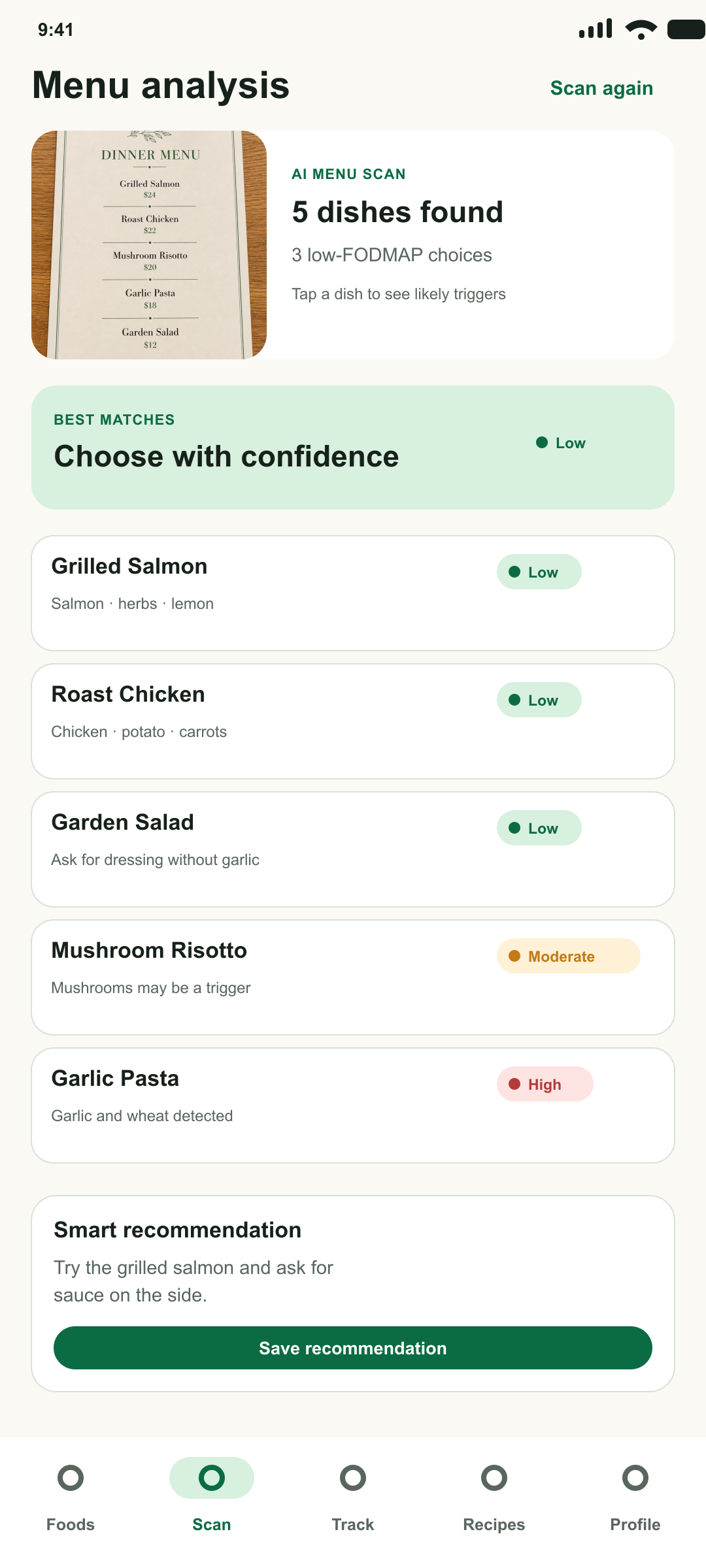
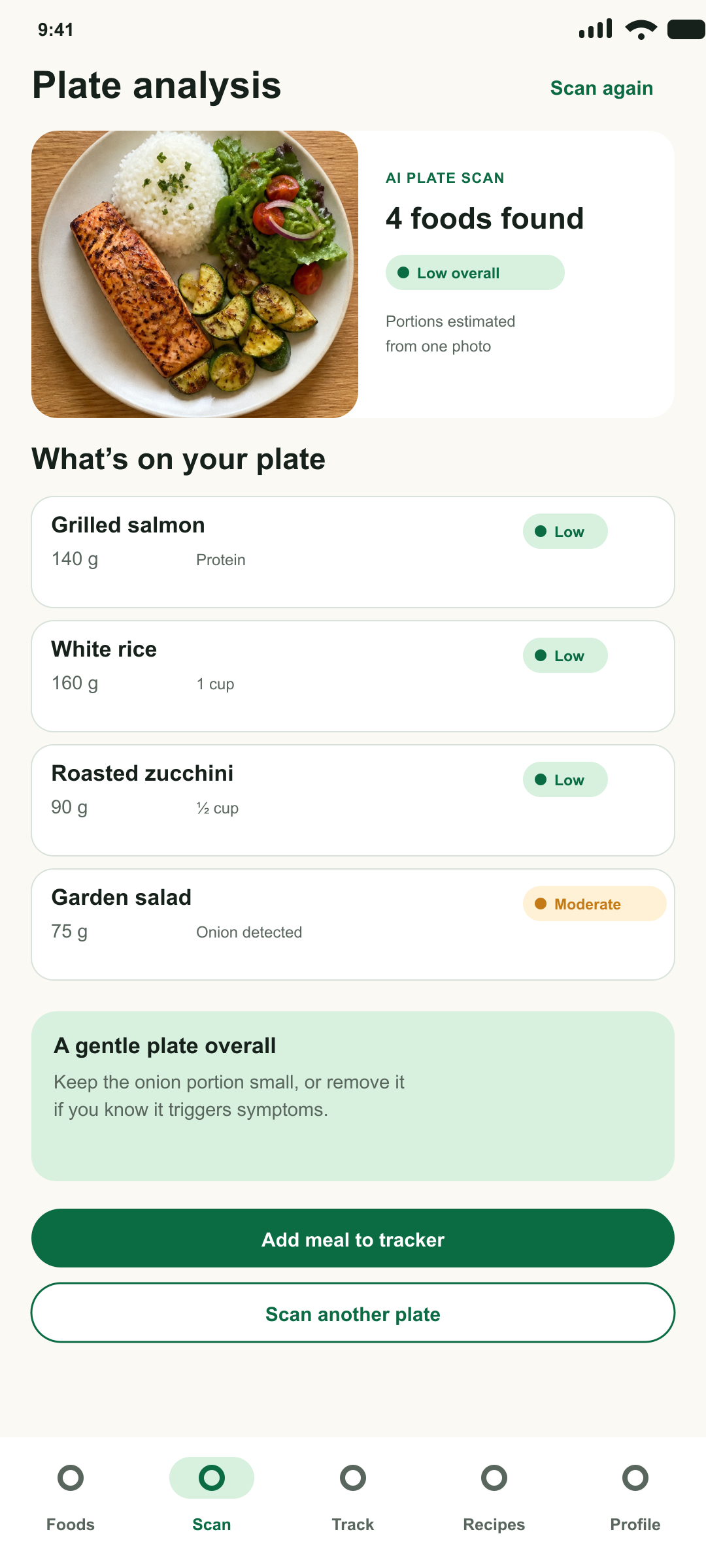
Serving size and product formulation matter. Use the current Monash FODMAP App or advice from a FODMAP-trained dietitian instead of treating a food as universally “safe.” Our food database is a practical reference, not a replacement for laboratory-tested app data.
Step 2: Reintroduction
Continue your Step 1 baseline while testing one FODMAP challenge at a time. Monash’s standard process uses a food rich in one FODMAP group daily for three days while symptoms are recorded. The objective is to identify which groups and portions you tolerate—not to provoke the strongest possible reaction.
Begin challenges when symptoms are reasonably controlled. A dietitian can help select foods, doses and recovery time between challenges. See our reintroduction guide for a planning framework.
Step 3: Personalization
Reintroduce foods and FODMAP groups that were tolerated. Limit poorly tolerated foods only as much as needed for symptom management, and consider retesting over time with professional guidance. The goal is the most varied, nutritionally adequate diet you can comfortably eat.
Who Should Consider It?
The diet is intended primarily for people with a confirmed IBS diagnosis. Similar symptoms can have other causes, so seek a medical assessment before starting. A clinician can evaluate warning signs and decide whether further testing is appropriate.
Work with a FODMAP-trained dietitian where possible, especially if you are underweight, pregnant, have a history of disordered eating, have multiple dietary restrictions, or have another gastrointestinal condition.
How to Assess Progress
- Record symptoms, bowel habits, meals and relevant non-food factors such as stress.
- Compare Step 1 with your usual baseline after 2–6 weeks.
- Do not expect symptoms to disappear completely; IBS can fluctuate and factors beyond FODMAPs may contribute.
- If Step 1 does not produce a meaningful improvement, consult your healthcare professional rather than restricting more foods.
Common Pitfalls
- Staying in Step 1 too long: the restrictive phase is temporary.
- Ignoring portions: a low rating applies to a tested serving, not an unlimited amount.
- Skipping reintroduction: this can leave the diet unnecessarily narrow.
- Changing many variables at once: it becomes harder to interpret symptoms.
- Relying on old food lists: laboratory data and product recipes can change.
Practical Resources
- Monash University: Starting the Low FODMAP Diet
- NICE guideline: IBS diagnosis and management
- Our elimination-phase guide
- Low FODMAP recipes
- Restaurant guides
This article is educational and has not been individually medically reviewed. It does not replace diagnosis or personalized advice from a physician or registered dietitian.