· FODMAP Diet Guide · guides · 9 min read
The Low FODMAP Step 1: A Practical 2–6 Week Guide
A practical plan for the temporary 2–6 week first step of the low FODMAP diet, including meal ideas, symptom tracking, and what to do next.
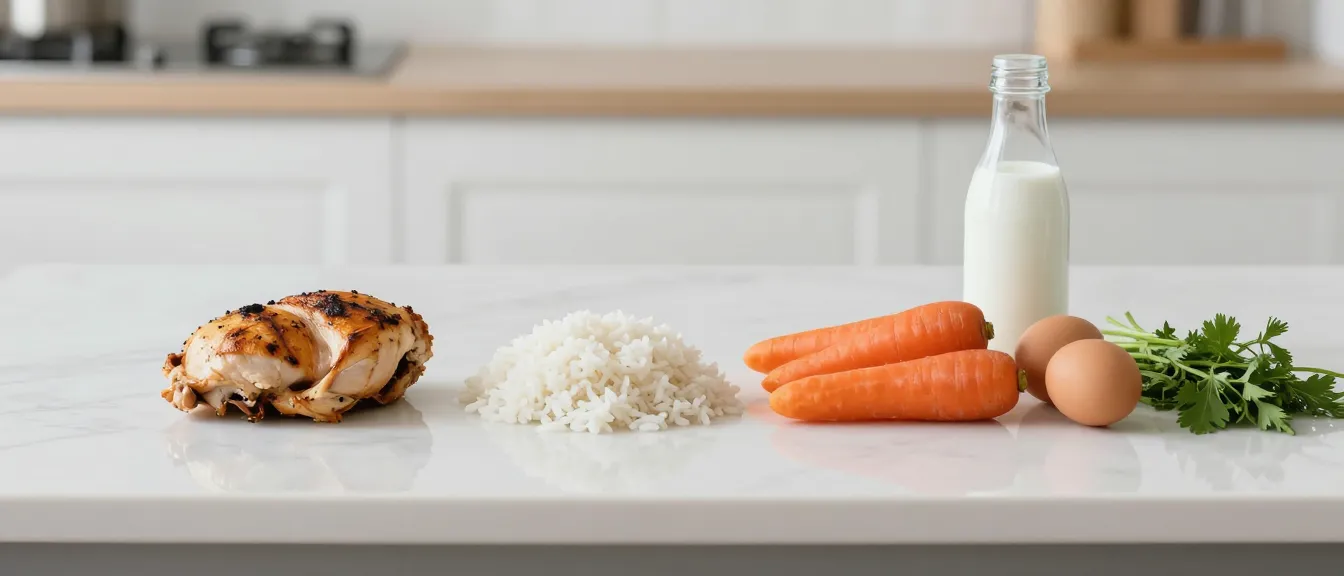
Last night you spent 20 minutes Googling “can I eat tomatoes on FODMAP” at 11 PM. This morning you stood in front of your pantry realizing most of it is now off-limits. And you still don’t know what’s safe for lunch.
This guide explains the first step of the low FODMAP diet: temporarily swapping higher FODMAP foods for lower FODMAP alternatives for 2–6 weeks while monitoring symptoms. Many, but not all, people with IBS improve during this step. It should be undertaken after diagnosis and ideally with a FODMAP-trained dietitian.
What Is the Elimination Phase?
The elimination phase, also known as Phase 1 or the restriction phase, involves temporarily removing all high FODMAP foods from your diet and replacing them with low FODMAP alternatives. Think of it as a “reset” for your digestive system.
The goal isn’t to identify triggers yet – that comes in Phase 2. Instead, this phase aims to:
- Reduce your symptoms to a manageable level or eliminate them entirely
- Establish a baseline of how you feel without FODMAP triggers
- Prepare you for testing individual FODMAPs in the reintroduction phase
- Create a consistent period for evaluating your response
How Long Does the Elimination Phase Last?
Monash University, the developers of the low FODMAP diet, sets the elimination phase at 2-6 weeks. Here’s why that window matters:
Why 2-6 Weeks?
At least 2 weeks:
- This allows time to apply the swaps consistently
- Symptom patterns may become clearer in a diary
Maximum of 6 weeks:
- Prevents unnecessary nutritional restrictions
- Reduces the risk of negative impacts on gut microbiome diversity
- The elimination phase restricts important fiber sources from fruits, vegetables, and whole grains
Important: Not a Long-Term Diet
A common misconception is that the low FODMAP diet is a permanent way of eating. This is incorrect and potentially harmful. The elimination phase is intentionally brief because:
- Prolonged restriction can lead to nutritional deficiencies
- Your gut microbiome diversity may decrease
- Constipation can worsen due to reduced fiber intake
- You may unnecessarily limit foods you can actually tolerate
- Social and psychological impacts of long-term restriction
Monash University recommends assessing the response after 2–6 weeks and moving to reintroduction when symptoms have improved. If they have not, discuss other approaches with your healthcare team rather than extending restriction indefinitely.
When Should You Assess the Result?
Response timing and degree vary. Record symptoms, bowel habits, food portions and relevant non-food factors throughout the 2–6 week period. Do not expect symptoms to disappear completely: IBS fluctuates, and stress, sleep, medications, meal size and other factors can contribute.
If there is no meaningful improvement by the end of the recommended period, review the diet and other possible treatments with your clinician or dietitian. Do not make the diet progressively more restrictive on your own.
What to Eat During Elimination
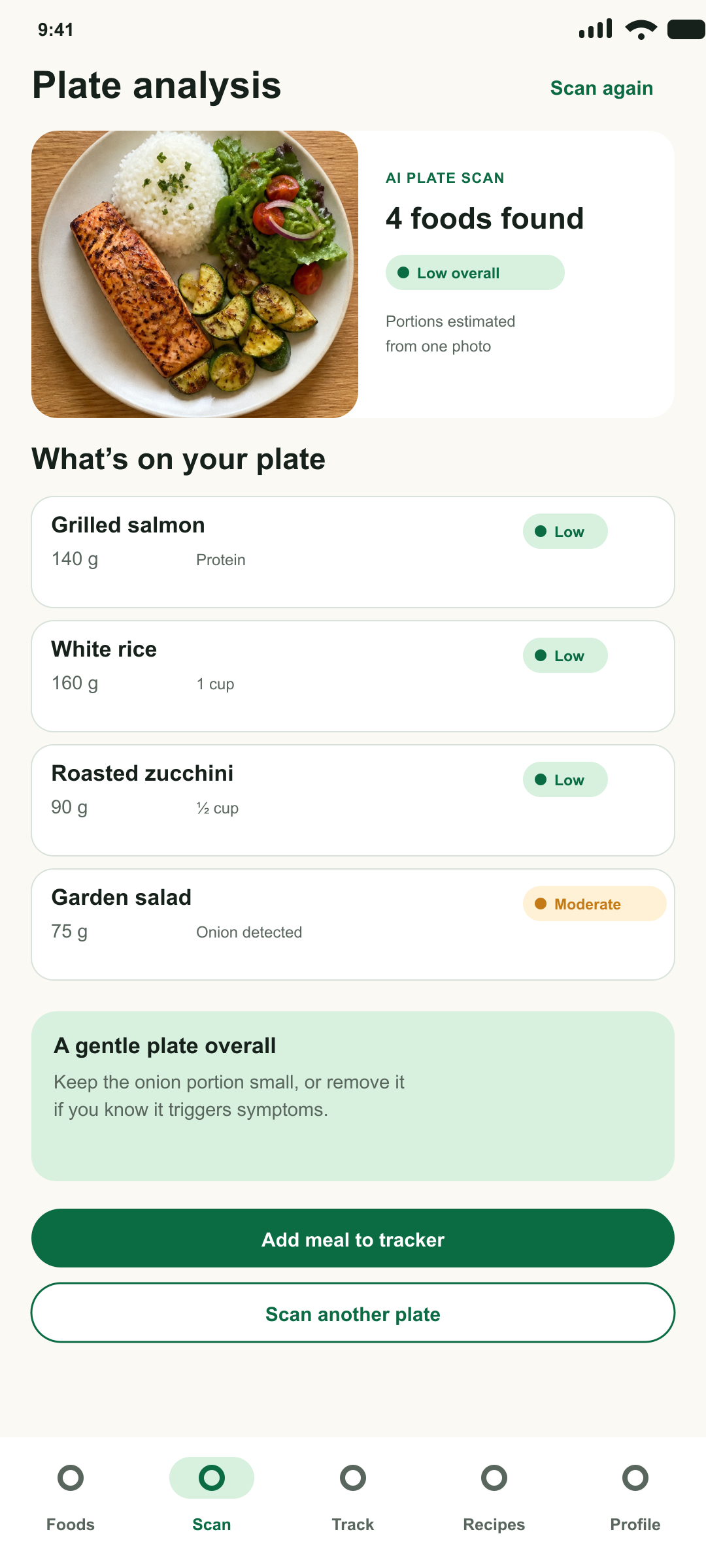
Your options are wider than you think. You can browse our complete food database for quick lookups. The key shift: stop scanning the “avoid” list and start building meals around what’s safe.
Safe Proteins
All plain proteins are not a meaningful source of FODMAP carbohydrates when plain:
- Fresh chicken, turkey, beef, pork, lamb
- Fresh fish and seafood
- Eggs (prepared any way)
- Firm tofu (drain well)
- Plain tempeh
Watch out for: Processed meats with onion or garlic powder, pre-marinated meats, breaded proteins, sausages with added fillers
Low FODMAP Dairy & Alternatives
- Lactose-free milk and yogurt
- Hard cheeses: cheddar, parmesan, Swiss, brie, feta (in small amounts)
- Almond milk (check for additives)
- Rice milk
- Coconut milk (canned, up to ½ cup)
- Lactose-free butter and cream cheese
Avoid: Regular milk, soft cheeses (ricotta, cottage cheese), ice cream, soy milk made from whole soybeans
Vegetables (Low FODMAP Portions)
- Carrots
- Cucumber
- Bell peppers (all colors)
- Tomatoes
- Zucchini
- Lettuce varieties
- Spinach
- Bok choy
- Green beans
- Eggplant
- Potatoes (white, not sweet in large amounts)
Watch your portions: Even low FODMAP vegetables can stack if you eat too many types in one meal. A food that’s safe at half a cup might trigger symptoms at a full cup.
Fruits (Low FODMAP Portions)
- Strawberries (10 medium)
- Blueberries (¼ cup)
- Oranges (1 medium)
- Grapes (1 cup)
- Kiwi (2 small)
- Cantaloupe (½ cup diced)
- Banana (1 medium, firm)
- Pineapple (1 cup diced)
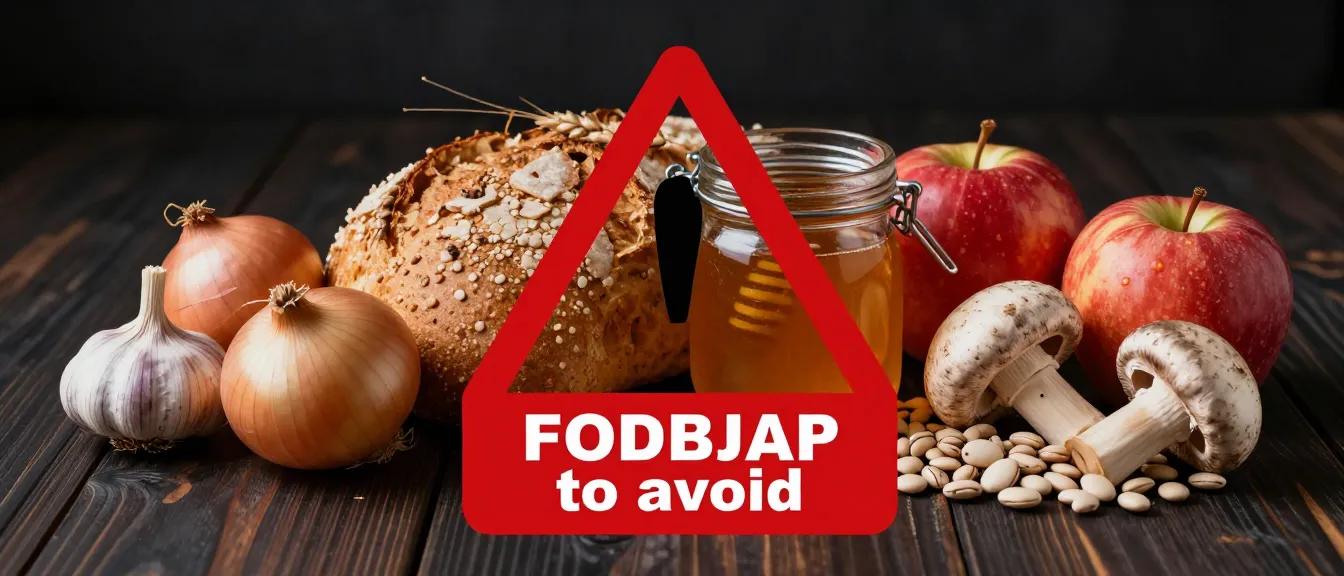
Avoid: Apples, pears, cherries, watermelon, dried fruit, fruit juice
Grains & Starches
- White rice, brown rice, rice noodles
- Quinoa
- Oats (traditional or rolled)
- Gluten-free bread and pasta
- Sourdough spelt bread (fermentation reduces fructans)
- Corn tortillas
- Polenta
Avoid: Regular wheat bread and pasta, rye, barley
Fats & Oils
- Olive oil
- Garlic-infused oil (the FODMAP doesn’t transfer to oil)
- Butter
- Coconut oil
- Most vegetable oils
Flavor Builders (Onion & Garlic Alternatives)
Since onion and garlic are high FODMAP, use these alternatives:
- Garlic-infused oil (FODMAPs don’t dissolve in oil)
- Green onion tops (the green part only)
- Chives
- Fresh herbs: basil, oregano, thyme, rosemary
- Ginger
- Lemongrass
Meal Planning Made Easy
These three sample days show you exactly how to eat while staying low FODMAP. Each day includes protein at every meal, healthy fats for satiety, and enough fiber from safe sources to prevent constipation — one of the most common side effects of this phase.
Sample Day 1
Breakfast: Scrambled eggs with spinach and bell peppers, sourdough spelt toast with butter Snack: Rice cakes with peanut butter Lunch: Grilled chicken salad with mixed greens, cucumber, carrots, cherry tomatoes, olive oil dressing Snack: Lactose-free yogurt with strawberries Dinner: Baked salmon with roasted zucchini and carrots, quinoa
Sample Day 2
Breakfast: Oatmeal made with lactose-free milk, topped with banana and blueberries Snack: 1 orange and a handful of almonds (10-15) Lunch: Rice bowl with firm tofu, bok choy, carrots, ginger, tamari sauce Snack: Gluten-free crackers with cheddar cheese Dinner: Turkey meatballs (homemade without garlic), gluten-free pasta, marinara sauce (make your own without onion/garlic), side salad
Sample Day 3
Breakfast: Smoothie with lactose-free yogurt, banana, strawberries, spinach, almond milk Snack: Rice crackers with firm cheese Lunch: Tuna salad (mayo, cucumber, lettuce) on gluten-free bread Snack: Small banana with 10 walnut halves Dinner: Stir-fry with shrimp, bell peppers, zucchini, carrots over white rice with garlic-infused oil
Need more meal ideas? Browse our low FODMAP recipes for dozens of tested meals, or check the food database to build your own combinations with confidence.
Common Challenges and Solutions
Challenge 1: Hidden FODMAPs
Problem: Many processed foods contain hidden high FODMAP ingredients.
Solution:
- Read every ingredient label carefully
- Watch for: onion powder, garlic powder, honey, high-fructose corn syrup, inulin, chicory root
- Use the Monash FODMAP app to check processed foods
- When in doubt, make it from scratch
Challenge 2: Eating Out
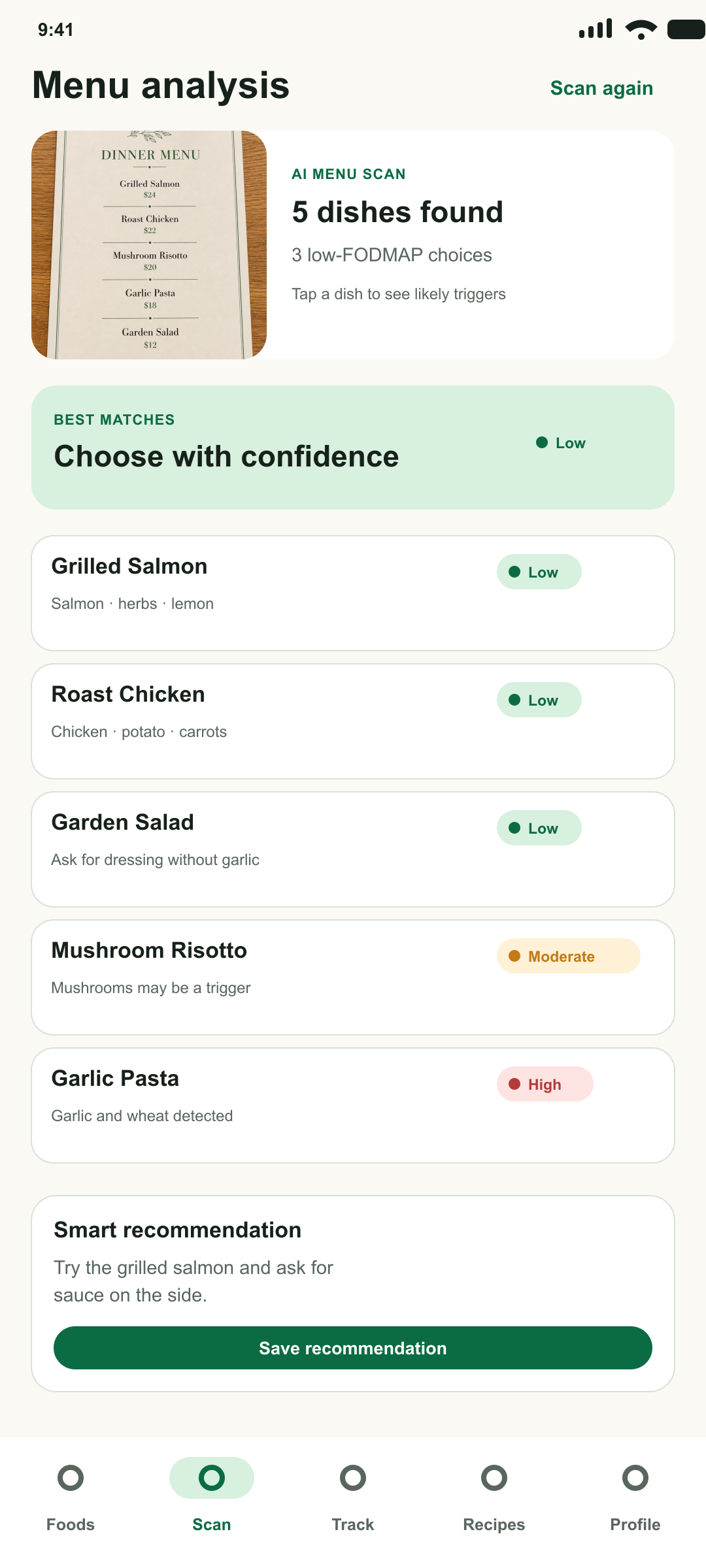
Problem: Restaurant meals often include onion, garlic, and other high FODMAP ingredients. Check our restaurant guide for dining-out strategies.
Solution:
- Call ahead and explain your dietary needs
- Choose simple dishes: grilled proteins with steamed vegetables
- Ask for oil-based dressings on the side
- Avoid creamy sauces, breaded items, and pre-marinated meats
- Bring your own safe condiments if needed
Challenge 3: Social Situations
Problem: Family gatherings and social events revolve around food.
Solution:
- Eat beforehand so you’re not tempted by hunger
- Bring a low FODMAP dish to share
- Be honest but brief: “I’m following a special diet for digestive health”
- Focus on socializing rather than food
Challenge 4: Constipation
Problem: Reducing high FODMAP foods can mean less fiber, worsening constipation.
Solution:
- Include high-fiber low FODMAP foods: oats, quinoa, chia seeds, ground flaxseed
- Consider a low FODMAP fiber supplement: psyllium husk, PHGG (partially hydrolyzed guar gum, a gentle soluble fiber sold as Sunfiber)
- Drink plenty of water (at least 8 glasses daily)
- Stay physically active
- Don’t cut vegetables too drastically
Challenge 5: Feeling Overwhelmed
Problem: The diet seems complicated and restrictive.
Solution:
- Focus on creating 5-7 “safe” meals you can rotate — our recipe collection is a great starting point
- Prep ingredients in advance (cooked proteins, washed vegetables)
- Use the Monash app as your guidebook
- Join online support groups for recipes and motivation
- Remember it’s temporary – just 2-6 weeks
5 Tips to Stay on Track
1. Be Strict But Not Obsessive
During elimination, you need to be quite strict to see results. However, accidentally ingesting a small amount of a high FODMAP food won’t ruin your progress. If you make a mistake, simply get back on track with your next meal.
2. Keep a Symptom Diary
Track daily:
- What you ate and when
- Portion sizes
- Symptoms (type, severity, timing)
- Bowel movements
- Sleep quality
- Stress levels
This record will be invaluable during reintroduction and helps identify non-food triggers.
3. Don’t Diagnose Other Issues
If new or different symptoms appear, don’t assume they’re FODMAP-related. Consult your healthcare provider to rule out other causes.
4. Work With a Professional
A FODMAP-trained dietitian can:
- Ensure you’re following the diet correctly
- Help with meal planning and recipes
- Monitor your nutritional intake
- Decide when you’re ready for reintroduction
- Adjust the approach if needed
5. Stay Consistent Through the Rough Days
Some days will be better than others. Stress, hormones, sleep, and other factors affect IBS symptoms beyond diet. Give the full 2-6 weeks before judging whether the diet is working.
Signs You’re Ready for Reintroduction
You should move to Phase 2 (reintroduction) when:
- Your symptoms are well-controlled – reduced to a minimum or eliminated
- You’ve completed at least 2-6 weeks of strict elimination
- You understand the principles of the diet and can identify FODMAP content
- You have professional support from a dietitian
- You’re mentally prepared to test foods systematically
If symptoms haven’t improved after 4-6 weeks of strict adherence, the FODMAP diet may not be the right approach for you. Consult your healthcare team to explore other treatment options.
What If the Elimination Phase Doesn’t Work?
If you see no improvement after 4-6 weeks:
Consider these possibilities:
- Non-FODMAP food triggers (caffeine, fat, spice, alcohol)
- Stress and psychological factors
- Other underlying conditions (small intestinal bacterial overgrowth (SIBO), bile acid malabsorption (a condition where your body doesn’t properly reabsorb bile acids, causing diarrhea), celiac disease)
- Inadvertent FODMAP consumption (hidden sources)
- The diet simply isn’t effective for your type of IBS
Not everyone with IBS responds to a low FODMAP approach. This does not mean you have failed; another evidence-based strategy may be more suitable.
The Bottom Line
The elimination phase is your foundation for FODMAP success. Strictly limit high FODMAP foods for 2-6 weeks, give your digestive system a real break, and establish the baseline you need for testing.
Here’s what to keep in mind:
- This is temporary — 2-6 weeks, not a lifestyle
- Strict adherence matters — halfway effort produces unclear results
- Response varies — use the full recommended window and assess it systematically
- A dietitian can help maintain nutrition and interpret the result
- The real answers come in the reintroduction phase
You now have the foods, the meal plan, and the timeline. Pick your start date, stock your kitchen, and begin.
What’s Next?
Choose the step that matches where you are right now:
- Start reintroduction and find your triggers. Follow our FODMAP Reintroduction Guide for a structured, week-by-week approach to testing individual FODMAPs.
- Check any food in seconds. Use the food database to verify whether a food is safe, or grab our low FODMAP food list as a printable reference for grocery shopping.
- Get tonight’s dinner sorted. Browse our low FODMAP recipes for tested meals you can make without second-guessing ingredients.
Disclaimer: This information is educational and should not replace advice from a qualified healthcare professional. Always work with a FODMAP-trained dietitian when following the low FODMAP diet.