· FODMAP Diet Guide · guides · 10 min read
FODMAP Stacking Explained: Why Serving Sizes Matter
Understand FODMAP stacking and why it matters for managing IBS symptoms. Learn how combining multiple low FODMAP foods can trigger symptoms, how to use the traffic light system, and strategies to avoid unintentional FODMAP accumulation.

FODMAP Stacking Explained: Why Serving Sizes Matter
You’ve been diligently following the low FODMAP diet, carefully eating only “green light” foods from the Monash app, yet you’re still experiencing symptoms. The culprit might be FODMAP stacking – a phenomenon where multiple low FODMAP foods eaten together accumulate enough FODMAPs to trigger symptoms. Understanding this concept is crucial for successfully managing IBS.
What Is FODMAP Stacking?
FODMAP stacking occurs when you eat multiple servings of low FODMAP foods in one sitting, causing an accumulation of FODMAPs in your gut that collectively triggers IBS symptoms.
Think of it like this: Each low FODMAP food contains a small amount of FODMAPs (that’s why it’s rated “green” or “low”). When you eat one serving, the FODMAP load is small enough that your body can handle it. But when you eat 3, 4, or 5 different low FODMAP foods in the same meal, those small amounts add up to a moderate or even high FODMAP load – enough to cause bloating, gas, pain, or changes in bowel movements.
The Science Behind FODMAP Stacking
Research by Monash University shows that symptoms are triggered to a greater extent when people consume multiple FODMAPs in one sitting (e.g., fructose + fructans) compared to one FODMAP alone. The collective reduction of all FODMAPs improves IBS symptoms more than restricting any one FODMAP in isolation.
How FODMAPs Accumulate
When you eat multiple foods containing the same FODMAP type:
Example: Excess Fructose
- ½ cup mango = small amount of excess fructose (green)
- 1 tablespoon honey = small amount of excess fructose (green)
- Together in one meal = moderate to high fructose load (amber/red)
Example: Fructans
- 2 slices sourdough spelt bread = small amount of fructans (green)
- ½ cup broccoli = small amount of fructans (green)
- Together in one meal = moderate fructan load
The problem: Your small intestine can only absorb so much at once. When FODMAPs exceed your absorption capacity, they travel to your large intestine where bacteria ferment them, producing gas and triggering symptoms.
Understanding the Traffic Light System
The Monash FODMAP app uses a traffic light system for each food at different serving sizes:
Green Light (Low FODMAP)
- Safe to eat at the specified serving size
- Contains minimal FODMAPs
- Should not trigger symptoms when eaten alone
- Can generally eat multiple green foods together
Amber Light (Moderate FODMAP)
- Contains moderate amounts of FODMAPs
- May be tolerated by some people
- Often occurs when you exceed the green serving size
- Example: Sweet potato – ½ cup is green, but 100g+ is amber
Red Light (High FODMAP)
- Contains high amounts of FODMAPs
- Likely to trigger symptoms
- Should be avoided during elimination phase
- Example: 1 cup of sweet potato
Important: Each FODMAP type (fructose, lactose, fructans, GOS, sorbitol, mannitol) has its own rating in the app, plus an overall rating.
How Much Stacking Is Safe?
According to Monash University research, the cut-off criteria for rating FODMAP content were set conservatively. This means:
Good news: You can have at least three low FODMAP servings of vegetables in the same meal and generally be okay.
The conservative approach: Even if foods have amber or red lights for larger servings, you can safely consume the green serving sizes combined in one meal without triggering symptoms.
When Stacking Becomes a Problem
FODMAP stacking is most likely to cause issues when:
- Your symptoms are poorly controlled – If you’re still having symptoms on the diet, stacking may be contributing
- You have many green foods with upper limits – Foods that turn amber or red at larger servings
- You eat foods with the same FODMAP type – Multiple fructan foods, multiple polyol foods, etc.
- Your meals are very large – More total food means more cumulative FODMAPs
- You don’t space meals adequately – Eating again before the previous meal has cleared your system
Foods More Likely to Cause Stacking Issues
Foods with Upper Limits
These foods are green at small servings but turn amber or red at larger amounts:
Vegetables:
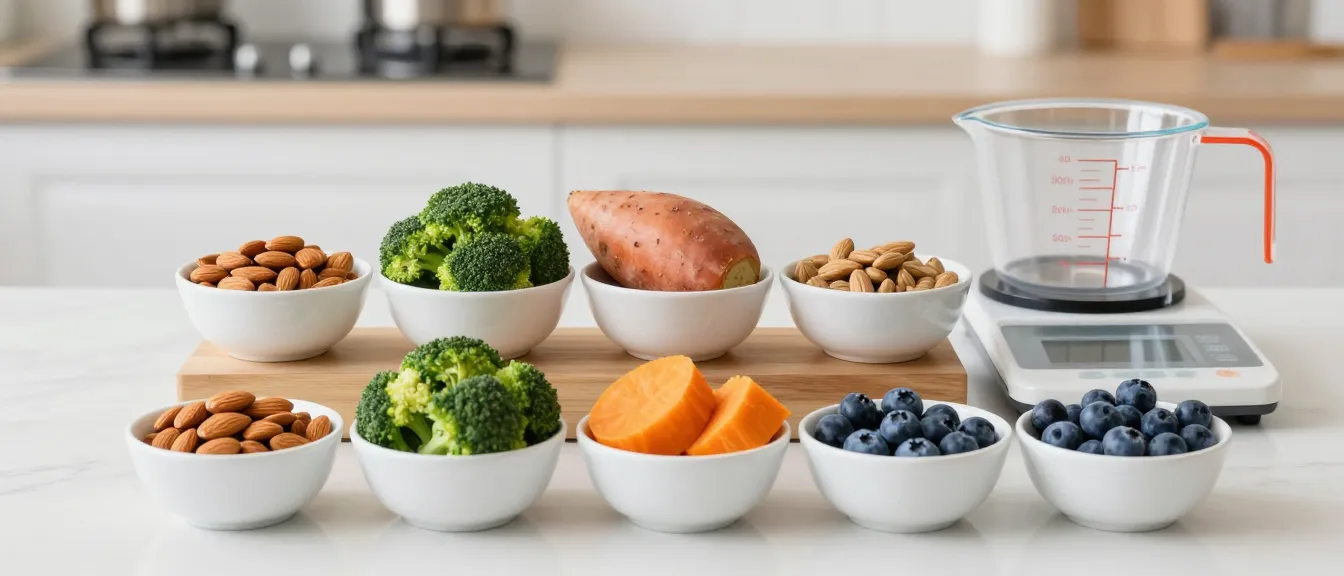
- Sweet potato (green at ½ cup, amber at 100g+)
- Broccoli florets (green at ¾ cup, amber at larger amounts)
- Celery (green at ¼ stick, red at larger amounts)
- Cabbage (green at ¾ cup, amber/red at larger amounts)
- Butternut squash (green at ¼ cup, amber at larger amounts)
Fruits:
- Avocado (green at 1/8, amber at ¼, red at ½+)
- Blueberries (green at 28g, amber at larger amounts)
- Dried cranberries (green at 1 tablespoon, red at larger amounts)
Nuts & Seeds:
- Almonds (green at 10 nuts, amber at larger amounts)
- Hazelnuts (green at 10 nuts, amber at larger amounts)
- Chia seeds (green at 2 tablespoons, amounts beyond vary)
Grains:
- Oats (generally safe but amounts matter)
- Quinoa (generally safe in 1 cup cooked servings)
Foods with No Upper Limit (FODMAP-Free)
These foods contain negligible FODMAPs even in large servings:
Vegetables:
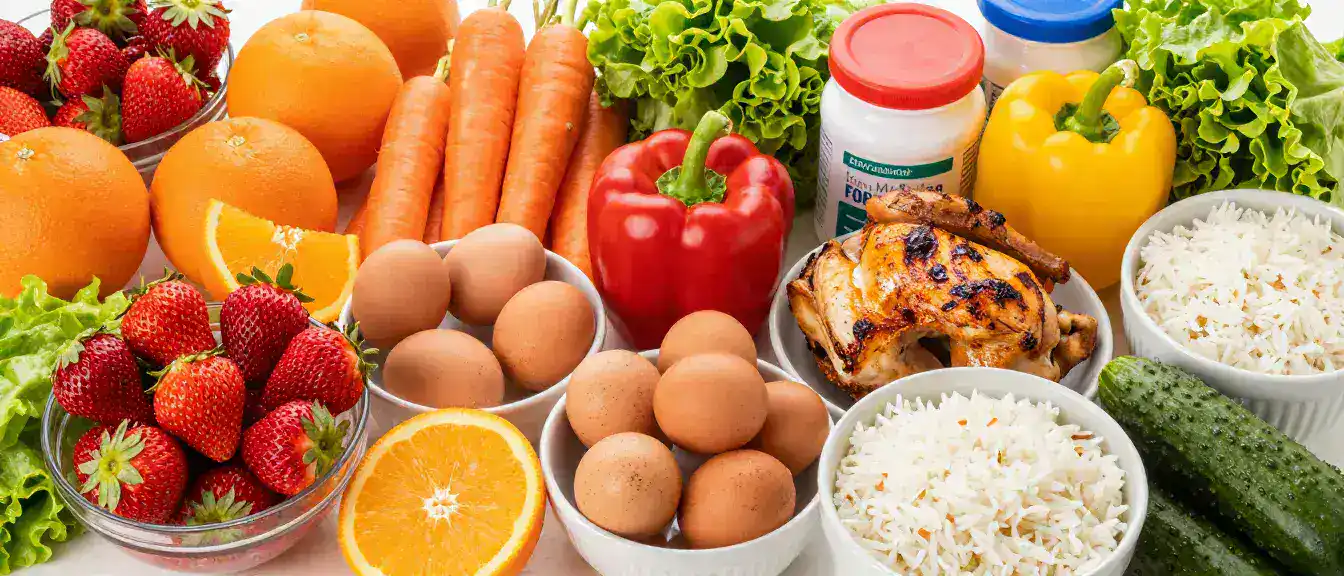
- Carrots
- Cucumber
- Lettuce (all types)
- Tomatoes
- Bell peppers (in moderate amounts)
- Zucchini (reasonable amounts)
- Spinach (cooked)
Proteins:
- All plain meats, poultry, fish, seafood
- Eggs
- Firm tofu (well-drained)
Grains:
- White rice
- Brown rice
- Rice noodles
Strategy: When building meals, use unlimited foods as your base and add limited-serving foods carefully.
Practical Strategies to Avoid FODMAP Stacking
Strategy 1: Space Out Your Meals
Why it works: Gives your digestive system time to process FODMAPs from one meal before the next arrives.
How to do it:
- Wait 3-4 hours between meals
- Don’t graze continuously throughout the day
- Allow your gut to “reset” between eating occasions
Example:
- Breakfast: 7:00 AM
- Snack: 10:00 AM
- Lunch: 1:00 PM
- Snack: 4:00 PM
- Dinner: 7:00 PM
Strategy 2: Use FODMAP-Free Foods as Your Base
Why it works: Foods with no FODMAPs can’t contribute to stacking.
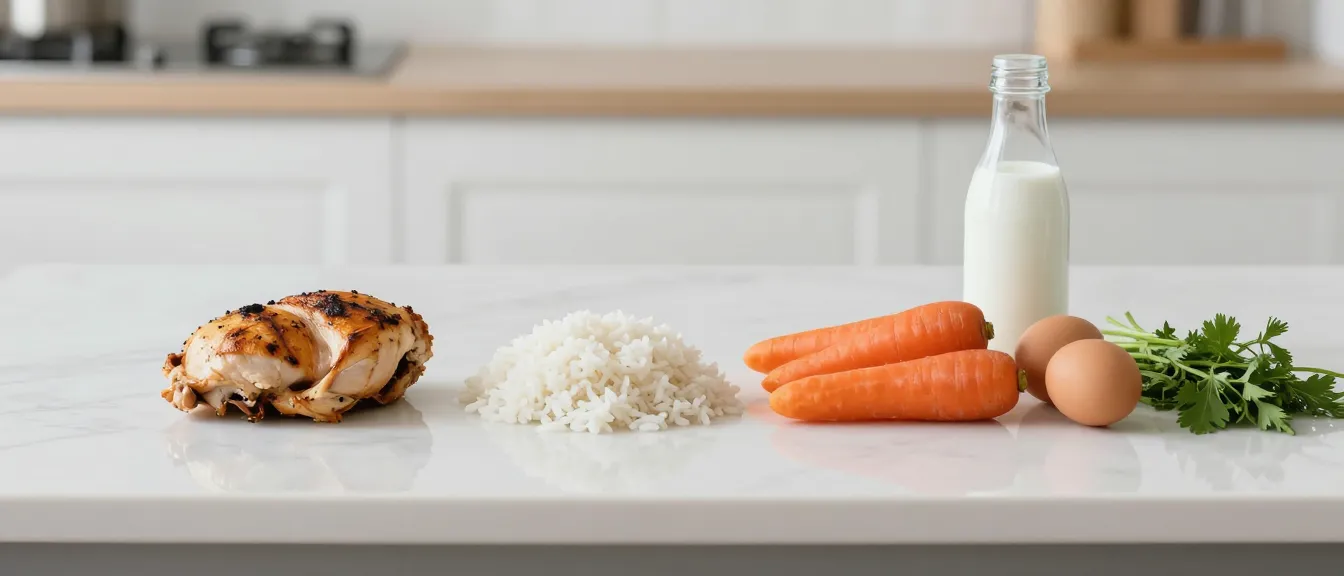
How to do it: Build meals around unlimited proteins and vegetables:
- Protein: Chicken, fish, eggs (unlimited)
- Base vegetable: Carrots, lettuce, cucumber (unlimited)
- Grain: White rice (unlimited)
- Limited additions: 1-2 foods with serving size limits
Example meal:
- Grilled chicken breast (unlimited) ✓
- Large serving of carrots (unlimited) ✓
- White rice (unlimited) ✓
- Small serving of broccoli (¾ cup limit) ✓
- Side salad with cucumber and lettuce (unlimited) ✓
Total: Minimal stacking risk because most components are unlimited.
Strategy 3: Limit Moderate FODMAP Foods to One Per Meal
Why it works: Reduces cumulative FODMAP load.
How to do it:
- Choose only ONE food with serving size restrictions per meal
- Make the rest unlimited foods
- Save other limited foods for different meals
Example: Instead of:
- ½ cup sweet potato (has limit)
- ¾ cup broccoli (has limit)
- 10 almonds (has limit)
Try:
- ½ cup sweet potato (has limit)
- Large serving of carrots (unlimited)
- Lettuce salad (unlimited)
Strategy 4: Check Individual FODMAP Ratings
Why it works: Foods can be low in some FODMAPs but contain others.
How to do it:
- Open the Monash app for each food
- Look at individual FODMAP ratings (not just overall)
- Avoid combining foods high in the same FODMAP type
Example of what to avoid:
- Sourdough spelt bread (contains fructans) +
- Broccoli (contains fructans) +
- Butternut squash (contains fructans) = High total fructan load
Better approach:
- Sourdough spelt bread (fructans)
- Carrots (no significant FODMAPs)
- Zucchini (minimal FODMAPs) = Lower fructan load
Strategy 5: Watch Your Portion Sizes Carefully
Why it works: Even green foods become amber or red in larger amounts.
How to do it:
- Measure portions initially (at least for a few weeks)
- Use the Monash app serving sizes exactly
- Don’t eyeball “close enough”
- Remember that portion creep is common
Common mistakes:
- “10 almonds” becomes 15-20
- “½ cup sweet potato” becomes ¾ cup
- “¾ cup broccoli” becomes 1+ cup
Solution: Use measuring cups and a food scale until you can accurately gauge portions.
Strategy 6: Consider the Percentage System
Some FODMAP apps (like FODMAP Friendly) show percentages:
How it works:
- Each food shows what percentage of daily FODMAP it contains
- Example: 1 cup blueberries = 50% of your fructose limit
- Aim to stay under 100% total for each FODMAP type per meal
Rule of thumb: Keep two servings of low FODMAP foods per meal, swap the rest for FODMAP-free foods.
Sample Meals: Stacking vs. Non-Stacking
Meal 1: High Stacking Risk ❌
Breakfast:
- 1 cup oatmeal (fructans)
- 2 tablespoons chia seeds (upper limit)
- ½ cup blueberries (near upper limit)
- 10 almonds (upper limit)
- 1 firm banana (fructose)
Problem: Five different foods with serving limits, multiple FODMAP types, large volume
Meal 1: Low Stacking Risk ✓
Breakfast:
- 2 scrambled eggs (unlimited)
- 1 slice sourdough spelt toast (limited, but one serving)
- 10 strawberries (well within limit)
- Side of cooked spinach (unlimited)
Why it’s better: Only one limited food (bread), rest are safe or unlimited
Meal 2: High Stacking Risk ❌
Dinner:
- ¾ cup broccoli (at limit)
- ½ cup sweet potato (at limit)
- ⅓ cup butternut squash (at limit)
- Small side salad with ¼ avocado (at limit)
Problem: Four vegetables all at or near their limits, high cumulative FODMAP load
Meal 2: Low Stacking Risk ✓
Dinner:
- Baked salmon (unlimited)
- Large serving of roasted carrots (unlimited)
- ½ cup white rice (unlimited)
- ¾ cup broccoli (limited, but one serving)
- Side salad with cucumber and lettuce (unlimited)
Why it’s better: Only one vegetable with a limit, rest are unlimited
When Should You Worry About Stacking?
You DON’T Need to Worry If:
- Your symptoms are well-controlled on the low FODMAP diet
- You’re eating reasonable portions of 2-3 green foods per meal
- You’re spacing meals 3-4 hours apart
- You’re not experiencing symptoms after meals
Remember: Monash’s conservative ratings allow for multiple green servings per meal without issues for most people.
You SHOULD Consider Stacking If:
- You’re still having symptoms despite strict FODMAP adherence
- You consistently eat 4-5+ limited foods per meal
- You graze all day without meal spacing
- You’ve been increasing portion sizes without realizing
- Your symptoms occur after seemingly “safe” meals
Troubleshooting FODMAP Stacking
Step 1: Keep a Detailed Food Diary
Track for 1-2 weeks:
- Every food and drink
- Exact portion sizes (measure/weigh)
- Timing of meals
- Symptoms (type, severity, timing)
Step 2: Analyze Your Meals
Look for patterns:
- Are you eating 4+ limited foods per meal?
- Are portion sizes exceeding Monash recommendations?
- Are you eating foods with the same FODMAP type together?
- Are you spacing meals less than 3 hours apart?
Step 3: Simplify Your Meals
For 3-5 days:
- Build meals around unlimited proteins and vegetables
- Add only ONE limited food per meal
- Space meals 4 hours apart
- Measure portions carefully
Step 4: Monitor Results
- Do symptoms improve with simpler meals?
- Can you identify which combinations cause problems?
- Do you feel better with more meal spacing?
If symptoms improve, stacking was likely the issue.
Real-World Examples
Example 1: The Smoothie Problem
Problematic smoothie:
- 1 cup lactose-free yogurt
- 1 banana
- ½ cup blueberries
- 2 tablespoons chia seeds
- 10 almonds
- 1 tablespoon almond butter
Issue: Six different ingredients, several at serving limits, consumed rapidly
Better approach:
- 1 cup lactose-free yogurt
- 1 banana OR berries (not both)
- Spinach (unlimited)
- Ice
Example 2: The Salad Problem
Problematic salad:
- Mixed greens (unlimited) ✓
- ½ cup sweet potato (at limit)
- ¼ avocado (at limit)
- ¾ cup broccoli (at limit)
- 10 almonds (at limit)
- Cherry tomatoes (unlimited) ✓
Issue: Four vegetables at their serving limits
Better approach:
- Mixed greens (unlimited)
- Grilled chicken (unlimited)
- Large serving of carrots (unlimited)
- Cucumber (unlimited)
- Cherry tomatoes (unlimited)
- ½ cup sweet potato OR broccoli (choose one)
Example 3: The Snack Problem
Problematic snacking pattern:
- 10:00 AM: 10 almonds + 20 blueberries
- 11:00 AM: Rice cakes with almond butter
- 12:00 PM: Small banana
- 1:00 PM: Lunch
Issue: Multiple snacks too close together, no time for gut to process
Better approach:
- 10:00 AM: Rice cakes with cheddar cheese + 10 strawberries
- 1:00 PM: Full lunch (after 3-hour gap)
Advanced Tip: The “One Per Category” Rule
A simple rule to prevent stacking:
Choose ONE item from each category per meal:
Categories:
- Protein (usually unlimited)
- Grain/Starch (one with limit, e.g., quinoa, or unlimited like rice)
- Vegetable with limit (one, e.g., broccoli)
- Unlimited vegetables (as many as you want)
- Fruit (one serving)
- Fat/nuts (one serving if any)
This automatically prevents over-accumulation of FODMAPs.
The Bottom Line
FODMAP stacking is a common reason why people still experience symptoms despite following the low FODMAP diet correctly. The solution isn’t to eat less – it’s to eat smarter.
Key takeaways:
- Multiple low FODMAP foods can accumulate enough FODMAPs to trigger symptoms
- The Monash app’s conservative ratings allow for 3+ green servings per meal for most people
- If symptoms persist, simplify meals and focus on unlimited foods
- Space meals 3-4 hours apart to allow gut processing time
- Measure portions carefully – portion creep is real
- Build meals around unlimited proteins and vegetables, then add limited foods
- Not everyone needs to worry about stacking – only if symptoms persist
Understanding FODMAP stacking gives you more control over your symptoms and helps explain why “safe” foods might sometimes cause problems. With careful meal planning and portion awareness, you can maximize food variety while minimizing symptoms.
Disclaimer: This guide is for educational purposes. If you’re struggling with persistent symptoms despite following the low FODMAP diet, work with a FODMAP-trained dietitian to evaluate whether stacking or other factors are involved.