FODMAP Content Methodology
This methodology explains what our ratings mean, where they come from, and the limits of what a web guide can tell you.
Food ratings and portions
Our primary reference for laboratory-tested food portions is the current Monash University FODMAP program and app. We record the food form, amount, unit, and relevant FODMAP group when that information is available. Database results can change as foods are retested, so readers should verify a portion in the current Monash app before relying on it.
What “low FODMAP” means here
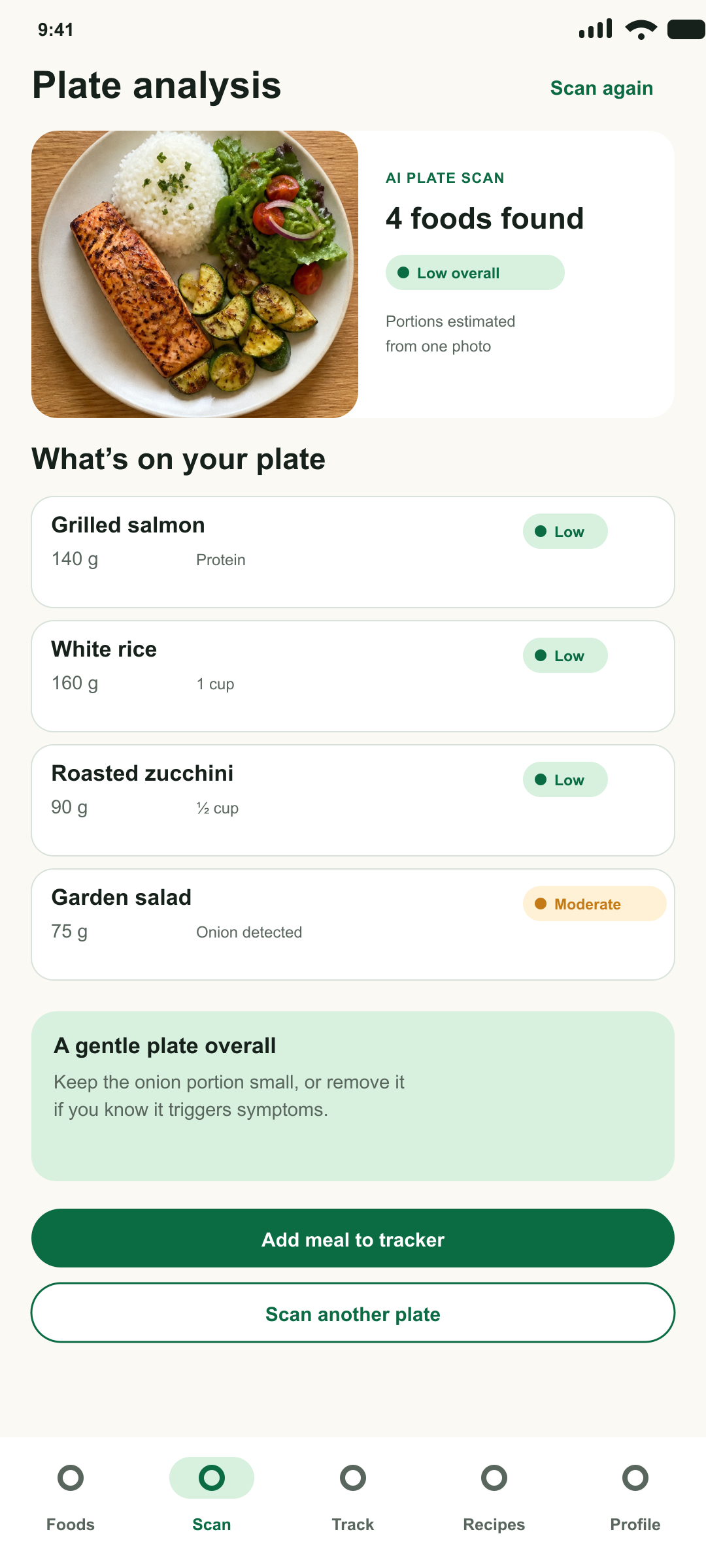
A low FODMAP label refers to a particular ingredient form and portion, not an unlimited amount and not a promise that the food will be symptom-free. Ripeness, processing, recipe composition, serving size, and cumulative FODMAP load can change the result. Individual tolerance also varies.
Recipes
We review every listed ingredient and the per-serving amount. A recipe is described as low FODMAP only conditionally: it must use the specified products, substitutions, and yield. We flag ingredients whose brands or processing methods vary and encourage readers to check product labels.
Restaurants
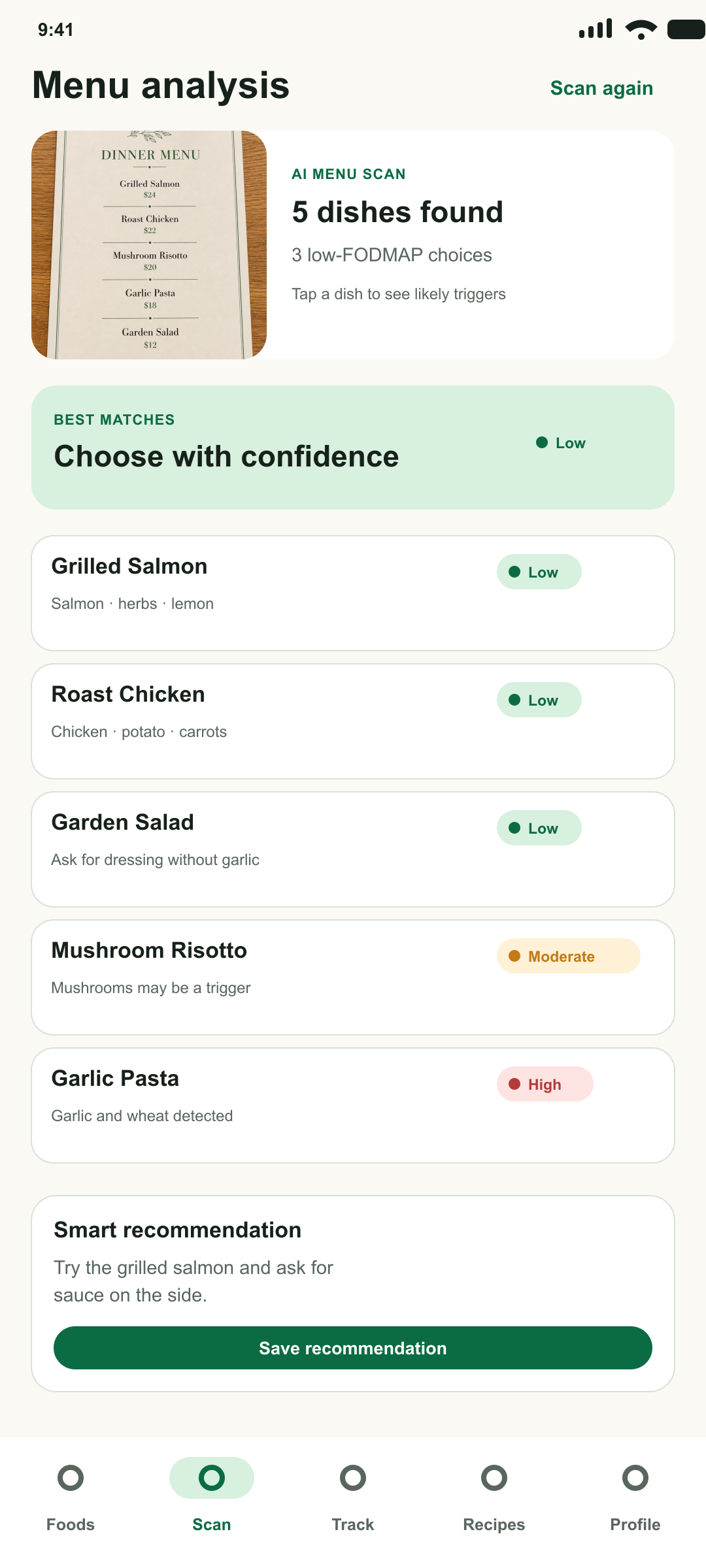
Restaurant pages use first-party menus and allergen or ingredient documents where available. “Options” are starting points for a conversation with staff, not guarantees against cross-contact or recipe changes. Each guide should show its market and last-verification date.
Evidence hierarchy
We prefer laboratory databases, peer-reviewed research, clinical guidelines, and first-party restaurant documents. Secondary health sources are used for context, not to override primary evidence. We link sources close to the claim when a public URL is available.
Medical scope
The elimination phase of the low FODMAP diet is intended to be temporary and is best undertaken with a FODMAP-trained registered dietitian or other qualified clinician. Persistent, severe, or changing symptoms need professional assessment.
Last updated September 4, 2026.