Is Watermelon Low FODMAP?
Find out if watermelon is safe on a low FODMAP diet, with strict serving limits due to multiple FODMAPs including fructose, sorbitol, and fructans.
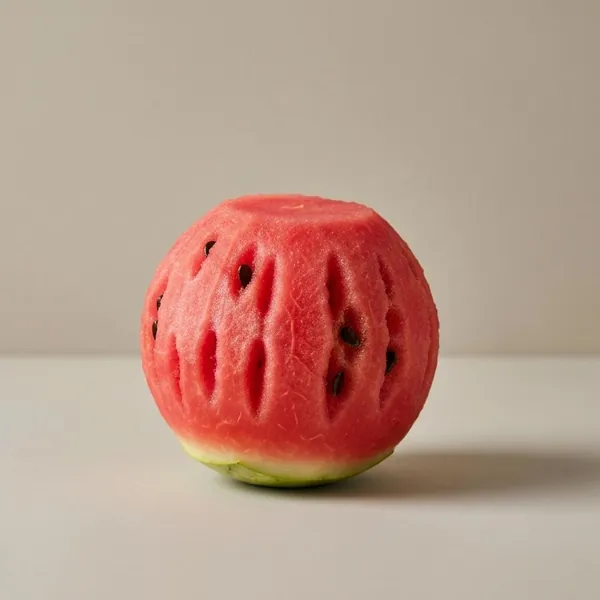
Watermelon is HIGH FODMAP
Reference portion: 1 cup diced (60g)
Serving Information
| ✓ Low FODMAP reference portion | 1 cup diced (60g) |
|---|---|
| ✗ High FODMAP at | 1 cup diced (150g) |
| FODMAP Types |
|
Is Watermelon Low FODMAP?
Watermelon is high FODMAP at typical serving sizes. Even a standard serving of 1 cup diced watermelon (150g) is high FODMAP, containing excess fructose, sorbitol, GOS, and fructans - a devastating combination for people with IBS. The Monash University testing shows that watermelon becomes moderate FODMAP at just 3/4 cup (90g) and high FODMAP at 1 cup (150g).
This makes watermelon one of the most problematic fruits for the low FODMAP diet. The refreshing summer favorite is best avoided entirely during the elimination phase, as even small portions can trigger multiple FODMAP-related symptoms.
Safe Serving Size
| Serving | FODMAP Level | FODMAP Content |
|---|---|---|
| 1/2 cup diced (60g) | Low to Moderate | Some FODMAPs present |
| 3/4 cup diced (90g) | Moderate | Multiple FODMAPs |
| 1 cup diced (150g) | High | Excess fructose, sorbitol, GOS, fructans |
| 2 cups diced (300g) | Very High | Severe FODMAP load |
According to Monash University testing of seedless watermelon, even what seems like a modest serving (1 cup or 150g) is high FODMAP. At 3/4 cup (90g), it’s already moderate FODMAP, meaning symptoms are likely for most people with IBS. A truly safe serving would be approximately 1/2 cup (60g) or less - far smaller than what most people consider a satisfying watermelon serving.
Why Is Watermelon So High in FODMAPs?
Watermelon is uniquely problematic because it contains FOUR different types of FODMAPs:
1. Excess Fructose (Monosaccharide): Watermelon contains significantly more fructose than glucose. This excess fructose:
- Cannot be properly absorbed in the small intestine
- Travels to the colon where bacteria ferment it
- Causes gas, bloating, and abdominal discomfort
- Triggers osmotic diarrhea in many people
2. Sorbitol (Polyol/Sugar Alcohol): Watermelon naturally contains sorbitol, which:
- Is poorly absorbed even in healthy individuals
- Draws water into the intestines (osmotic effect)
- Often causes diarrhea and urgent bowel movements
- Ferments in the colon, producing additional gas
3. GOS - Galacto-Oligosaccharides (Oligosaccharides): Watermelon contains GOS, which:
- Cannot be broken down by human digestive enzymes
- Must be fermented by gut bacteria
- Produces significant gas and bloating
- Is particularly problematic for people with IBS
4. Fructans (Oligosaccharides): Watermelon also contains fructans:
- Another type of oligosaccharide that humans cannot digest
- Ferments in the colon causing gas and bloating
- Found in many high FODMAP vegetables like onions and garlic
- Adds to the total FODMAP load
This “quadruple threat” makes watermelon extremely likely to trigger IBS symptoms. Even people who tolerate fructose may react to the sorbitol, GOS, and fructans. The combination is what makes watermelon particularly devastating for digestive health in IBS sufferers.
Why Watermelon Is Especially Problematic
Beyond the high FODMAP content, watermelon presents additional challenges:
Large typical servings: Most people eat 1-2 cups of watermelon as a snack or dessert, which is 2-4x the high FODMAP threshold.
High water content: While watermelon is 90%+ water, this doesn’t dilute the FODMAPs enough to make it safe. The remaining solid content is highly concentrated in FODMAPs.
Summer staple: Watermelon is ubiquitous at summer gatherings, picnics, and barbecues, making it socially challenging to avoid.
Difficult to estimate portions: When eating wedges or slices, it’s hard to gauge how much you’re consuming. What looks like a small slice can easily be 2+ cups.
Sweet taste is misleading: The refreshing sweetness makes watermelon seem “light” and “harmless,” but the FODMAP load is severe.
Tips for Avoiding Watermelon on Low FODMAP Diet
- Skip watermelon during elimination - With such a tiny safe serving and multiple FODMAPs, watermelon is best completely avoided during the 2-6 week elimination phase.
- Choose better summer fruits - Pineapple (1 cup), strawberries (5 berries), blueberries (1 cup), or cantaloupe are better warm-weather options.
- Watch for hidden watermelon - Check fruit salads, smoothies, agua fresca, and desserts for watermelon content.
- Avoid watermelon juice - Even more concentrated in FODMAPs than whole fruit.
- Say no to watermelon candy/gum - While artificial watermelon flavor doesn’t contain FODMAPs, these products often contain high FODMAP sweeteners like sorbitol or mannitol.
- Don’t test early in reintroduction - Watermelon challenges multiple FODMAP categories. Test fructose, polyols, GOS, and fructans separately before attempting watermelon.
- Explain to hosts - At summer gatherings, politely decline watermelon and bring your own low FODMAP fruits to share.
Watermelon Varieties and FODMAP Content
Monash University tested seedless watermelon. Other varieties likely have similar FODMAP profiles:
Seedless watermelon: Tested by Monash, high FODMAP at 1 cup (150g)
Seeded watermelon: Not specifically tested, but likely identical FODMAP content (seeds don’t affect the flesh)
Yellow/orange watermelon: Different color varieties, likely similar FODMAP levels
Mini/personal watermelons: Same FODMAP concentration as regular watermelons
Watermelon rind: Not tested, but traditionally pickled rinds would have vinegar and possibly high FODMAP seasonings
All watermelon varieties should be treated as high FODMAP unless specific testing proves otherwise.
Watermelon Products to Avoid
Watermelon juice: Concentrated FODMAPs without fiber, very high FODMAP
Agua fresca de sandia: Mexican watermelon water, high FODMAP from watermelon and often added sugar
Watermelon smoothies: High FODMAP unless using very small amounts (under 1/2 cup per serving)
Watermelon sorbet/ice cream: Concentrated watermelon, high FODMAP
Dried watermelon: Even more concentrated FODMAPs, definitely avoid
Watermelon candy: Artificial flavoring is okay, but products often contain high FODMAP sweeteners
Watermelon cocktails/mocktails: High FODMAP from juice or muddled fruit
Watermelon salad: High FODMAP if standard servings are used
Low FODMAP Alternatives to Watermelon
If you’re craving something refreshing and summery, try these low FODMAP alternatives:
Best summer fruit alternatives:
- Cantaloupe (3/4 cup or 120g) - Similar refreshing quality, safe serving
- Honeydew melon (1/2 cup or 90g) - Sweet and hydrating
- Pineapple (1 cup or 140g) - Tropical and refreshing
- Strawberries (5 medium) - Summer classic, much safer
- Blueberries (1 cup) - Perfect for fruit salads and snacking
Hydrating options:
- Cucumber (unlimited) - 95% water, crunchy and refreshing
- Oranges (1 medium) - Juicy and hydrating
- Grapes (only 6 grapes) - Another high FODMAP fruit, not a good substitute
For fruit salad: Mix cantaloupe, honeydew, pineapple, strawberries, and blueberries for a colorful, safe, and satisfying alternative to watermelon-heavy fruit salads.
Can You Build Tolerance to Watermelon?
Due to the multiple FODMAPs in watermelon, tolerance building is complex:
Reintroduction approach:
-
Test FODMAPs separately first:
- Fructose testing (using other fructose foods)
- Polyols/sorbitol testing (using other polyol foods)
- GOS testing (using other GOS foods)
- Fructans testing (using other fructan foods)
-
Only after individual FODMAP testing:
- Day 1: Try 1/2 cup watermelon, monitor for 48 hours
- Day 4: If tolerated, try 3/4 cup, monitor
- Day 7: If tolerated, try 1 cup (still high FODMAP)
Possible outcomes:
- Some people may tolerate 1/2-3/4 cup without symptoms if they pass all individual FODMAP tests
- Many people will react even to small amounts due to multiple FODMAPs
- Even if tolerated, the serving size remains impractically small
- Most people find better alternatives and don’t reintroduce watermelon
Work with a FODMAP-trained dietitian for complex reintroduction testing.
The Social Challenge of Avoiding Watermelon
Watermelon is deeply embedded in summer culture, making avoidance socially challenging:
At picnics and barbecues:
- Watermelon is often the main or only fruit offered
- Bring your own fruit salad with low FODMAP options to share
- Politely decline and explain you have dietary restrictions
At parties:
- Host may have specially prepared watermelon dishes
- Thank them and explain your restrictions
- Offer to bring an alternative fruit dish next time
Cultural significance:
- In some cultures, watermelon is a traditional summer food
- Find culturally appropriate low FODMAP alternatives
- Focus on other summer traditions you can enjoy
Children’s activities:
- Watermelon is common at summer camps, sports events, pool parties
- Pack safe alternatives for your child
- Educate caregivers about your child’s needs
Nutritional Value of Watermelon
Despite FODMAP issues, watermelon does offer some nutritional benefits:
Hydration: 90%+ water content supports hydration (though water is better and FODMAP-free)
Lycopene: Powerful antioxidant that gives watermelon its red color, may support heart health
Vitamins and minerals:
- Vitamin C (modest amounts)
- Vitamin A (from beta-carotene)
- Potassium
- B vitamins
Low calorie: About 46 calories per cup
However, these nutrients are also available in low FODMAP fruits that you can eat in safe quantities without triggering symptoms. Watermelon is not nutritionally essential on a low FODMAP diet.
Watermelon Myths and Facts
Myth: “Watermelon is mostly water, so it can’t cause problems.” Fact: The 10% solid content is highly concentrated in FODMAPs. The water doesn’t prevent fermentation of FODMAPs in the colon.
Myth: “Seedless watermelon is easier to digest.” Fact: Seeds don’t significantly affect FODMAP content or digestibility. Both seedless and seeded watermelons are high FODMAP.
Myth: “Watermelon is a ‘cleansing’ food that’s good for digestion.” Fact: For people with IBS, watermelon causes digestive distress due to FODMAPs, not cleansing.
Myth: “Organic watermelon is lower in FODMAPs.” Fact: Organic vs conventional doesn’t affect FODMAP content. Both have the same fructose, sorbitol, GOS, and fructan levels.
Myth: “I can eat unlimited watermelon because it’s healthy.” Fact: For IBS sufferers, even small amounts trigger symptoms. “Healthy” for one person may be problematic for another.
Scientific Research on Watermelon and IBS
FODMAP testing: Monash University’s breath hydrogen testing demonstrates clear symptom triggers from watermelon in people with IBS
Multiple FODMAP load: Research shows that foods containing multiple FODMAP types are more likely to cause symptoms than foods with a single FODMAP
Sorbitol effects: Studies confirm sorbitol causes osmotic diarrhea and is poorly absorbed in most people
Fructose malabsorption: Combined with polyols, fructose malabsorption effects are amplified
Individual variation: Some people are more sensitive to certain FODMAP types, explaining variable tolerance to watermelon
Watermelon Cravings and Substitutes
If you’re specifically craving watermelon, consider what you’re really craving:
Craving: Refreshing, hydrating quality Substitute: Cucumber water, coconut water (1 cup), or cantaloupe (3/4 cup)
Craving: Sweet summer flavor Substitute: Pineapple (1 cup), strawberries with a sprinkle of sugar
Craving: Cold, crisp texture Substitute: Frozen grapes (only 6 grapes - also limited) or frozen blueberries
Craving: Nostalgia/summer memories Substitute: Create new summer traditions with low FODMAP fruits you can enjoy
Frequently Asked Questions
Can I eat watermelon if I only have fructose malabsorption, not full IBS?
Even with only fructose malabsorption, watermelon’s excess fructose will likely cause symptoms. Additionally, the sorbitol (polyol) can cause osmotic diarrhea regardless of fructose tolerance. Best to avoid during elimination.
What about watermelon with lime and tajin (Mexican style)?
Lime is low FODMAP, and small amounts of tajin seasoning (chili powder and lime) are likely safe, but the watermelon itself is still high FODMAP. The additions don’t reduce FODMAP content.
Can I eat the white part of watermelon (near the rind)?
The white flesh hasn’t been specifically tested but likely contains FODMAPs. Some people use pickled watermelon rind, but the pickling process doesn’t remove FODMAPs, and additional ingredients may add more.
Is watermelon worse than other melons?
Yes, watermelon is among the highest FODMAP melons. Cantaloupe (3/4 cup) and honeydew (1/2 cup) offer better serving sizes, though still limited compared to non-melon fruits.
Can children eat watermelon on a low FODMAP diet?
Children following a pediatric low FODMAP diet for IBS should avoid watermelon during elimination. The same FODMAP limits apply regardless of age.
What if I accidentally ate a large serving of watermelon?
Monitor symptoms over 24-48 hours. You may experience bloating, gas, abdominal pain, and diarrhea from multiple FODMAPs. Stay hydrated, avoid other high FODMAPs, rest, and symptoms should gradually resolve. Resume low FODMAP eating.
Can I have watermelon during pregnancy while on low FODMAP?
If managing IBS during pregnancy with low FODMAP diet, the same rules apply. Focus on low FODMAP fruits that provide better nutrition in larger, satisfying servings (oranges, berries, cantaloupe in safe amounts).
Does frozen watermelon have different FODMAPs?
No, freezing doesn’t change FODMAP content. Frozen watermelon chunks or watermelon popsicles made from watermelon juice are still high FODMAP.
Why do I see watermelon in some “IBS-friendly” recipes?
Some recipes may pre-date updated FODMAP testing or may not be created by FODMAP-trained dietitians. Always verify ingredients against current Monash University data. Watermelon is definitively high FODMAP.
Frequently Asked Questions
Is watermelon low FODMAP?
No, watermelon is high FODMAP at typical serving sizes. Even 1 cup (150g) - a standard serving - is high FODMAP due to excess fructose, sorbitol, GOS, and fructans. Only very small portions may be tolerated.
What is the safe serving size for watermelon?
A safe low FODMAP serving would be approximately 1/2 cup (60g) based on Monash data showing moderate FODMAPs at 3/4 cup. However, 1 cup (150g) is already high FODMAP.
Why is watermelon so high in FODMAPs?
Watermelon contains a quadruple FODMAP threat: excess fructose, sorbitol (polyol), GOS (oligosaccharide), and fructans. This combination makes watermelon one of the worst fruits for people with IBS.
Can I eat seedless watermelon on a low FODMAP diet?
Seedless vs seeded doesn't affect FODMAP content. Both types are high FODMAP at normal serving sizes and should be avoided during the elimination phase.