Is Mango Low FODMAP?
Learn if mango is safe on a low FODMAP diet, with very small serving limits due to high excess fructose content that triggers IBS symptoms.
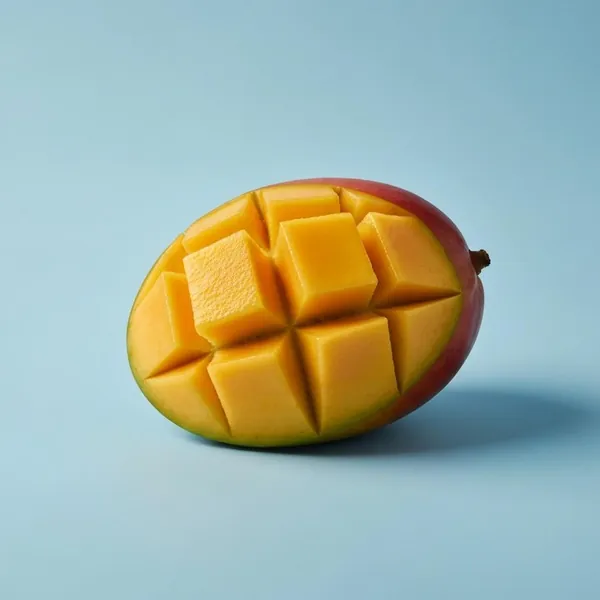
Mango is HIGH FODMAP
Reference portion: 2 teaspoons diced (9g)
Serving Information
| ✓ Low FODMAP reference portion | 2 teaspoons diced (9g) |
|---|---|
| ✗ High FODMAP at | 1/2 medium mango (140g) |
| FODMAP Types |
|
Is Mango Low FODMAP?
Mango is very high FODMAP at any normal serving size. Only a tiny 2 teaspoons of diced mango (9g) qualifies as low FODMAP, while 2 teaspoons (9g) is already moderate FODMAP, and 1/2 medium mango (140g) - a typical serving - is extremely high FODMAP. The culprit is excess fructose at extraordinarily high levels, making mango one of the absolute worst fruits for people with IBS and fructose malabsorption.
For practical purposes, mango should be completely avoided during the low FODMAP diet elimination phase, as the safe serving size is so tiny it’s essentially meaningless.
Safe Serving Size
| Serving | FODMAP Level | Fructose Content |
|---|---|---|
| 2 teaspoons diced (9g) | Low | Minimal but present |
| 2 teaspoons diced (9g) | Moderate | Excess fructose |
| 1/2 medium mango (140g) | High | Very high excess fructose |
| 1 medium mango (280g) | Very High | Extreme fructose load |
According to Monash University testing of fresh, peeled, pitted mango, even the “moderate” serving is only 2 teaspoons (9g) - literally two small spoonfuls. A half mango (140g), which many people would consider a reasonable snack, is classified as high FODMAP with extreme excess fructose content.
Why Is Mango Extremely High in Fructose?
Mango is particularly problematic for several reasons:
Extreme excess fructose: Mango contains one of the highest ratios of fructose to glucose among all fruits. When fructose significantly exceeds glucose:
- The small intestine cannot absorb the excess fructose
- Glucose normally helps transport fructose across the intestinal wall, but there’s not enough glucose in mango to help
- The unabsorbed fructose travels to the colon
- Gut bacteria ferment the fructose, producing gas, bloating, and discomfort
- Osmotic effect pulls water into the intestines, causing diarrhea
Concentrated sugar content: Mango is one of the sweetest fruits, and that sweetness comes primarily from fructose:
- Even small amounts pack a significant fructose load
- The natural sugars are very concentrated
- Tropical fruits like mango tend to have higher sugar content than temperate fruits
No balancing factors: Unlike some fruits that contain glucose to balance fructose, mango’s fructose dominates:
- Very little glucose present to aid absorption
- No other factors to mitigate the fructose load
- The imbalance makes symptoms almost inevitable at normal servings
For people with IBS and especially those with fructose malabsorption, mango is one of the most reliably symptom-triggering fruits.
Why the Tiny Serving Makes Mango Impossible
Two teaspoons of mango is absurdly small:
- Not a real serving: Literally two small spoonfuls - gone in one bite
- Impossible to satisfy cravings: Won’t curb hunger or desire for mango
- Wasteful: What do you do with the rest of a mango after taking 2 teaspoons?
- Psychologically frustrating: Knowing you can’t have more than a taste is difficult
- Impractical in recipes: Can’t meaningfully use mango in cooking or smoothies
- Better alternatives exist: Other fruits offer 50-100x larger servings
For these reasons, virtually all FODMAP dietitians recommend completely avoiding mango rather than attempting the 2-teaspoon serving. It’s not worth the effort, cost, or waste for such a minuscule amount.
Tips for Avoiding Mango on Low FODMAP Diet
- Completely avoid during elimination - Don’t even attempt the 2-teaspoon serving; it’s too small to be meaningful
- Watch for hidden mango - Mango appears in smoothies, fruit salads, salsas, chutneys, curries, and Asian dishes
- Avoid mango juice and nectar - Even more concentrated in fructose, extremely high FODMAP
- Check dried fruit mixes - Dried mango is popular in trail mixes and snack packs
- Skip mango desserts - Mango sticky rice, mango ice cream, mango sorbet are all very high FODMAP
- Read labels carefully - Mango appears in unexpected products like sauces, marinades, and dressings
- Decline mango lassi - Indian yogurt drink with mango is double FODMAP trouble (mango + potential lactose)
- Find tropical alternatives - Pineapple (1 cup) offers tropical flavor in a safe serving
Mango Varieties and FODMAP Content
Monash University tested fresh, peeled, pitted mango without specifying variety. All mango varieties likely have similar extreme fructose content:
Common varieties (all high FODMAP):
- Alphonso: Prized Indian variety, very sweet = very high fructose
- Ataulfo/Champagne: Small yellow mangoes, still high FODMAP
- Haden: Common in Americas, high fructose
- Kent: Large commercial variety, high FODMAP
- Tommy Atkins: Most common in US supermarkets, high FODMAP
- Francis: Haitian variety, high fructose
- Keitt: Late-season variety, high FODMAP
Green (unripe) mango: Not tested, but used in Asian cuisine. Likely still contains FODMAPs, possibly different types. Not a safe alternative.
All mango varieties should be treated as very high FODMAP regardless of color, size, or origin.
Dried Mango and Mango Products
Dried mango: Even worse than fresh. Water removal concentrates the fructose to extreme levels. Even 4 small strips (20g) is high FODMAP. Absolutely avoid.
Mango juice/nectar: Concentrated liquid fructose without fiber. Extremely high FODMAP. Often has added sugar making it even worse.
Mango puree: Used in smoothies and desserts, high FODMAP at any realistic serving
Mango chutney: High FODMAP from mango, often with added onion, garlic, and sugar
Mango salsa: High FODMAP from mango, though other ingredients (tomato, cilantro, lime) are low FODMAP
Mango ice cream/sorbet: Very high FODMAP from concentrated mango
Mango lassi: Double FODMAP threat from mango and dairy (unless made with lactose-free yogurt, still high from mango)
Mango sticky rice: Thai dessert with high FODMAP mango and coconut cream (check coconut FODMAP limits)
Freeze-dried mango: Concentrated FODMAPs, avoid
Mango powder (amchur): Used as souring agent in Indian cuisine. Very small amounts (pinch) likely okay as it’s used for tartness not sweetness
Low FODMAP Tropical Fruit Alternatives
If you’re craving tropical flavors, try these safer alternatives:
Best tropical substitutes:
- Pineapple (1 cup fresh or 140g) - Sweet, tropical, generous serving
- Dragon fruit (1 cup) - Exotic, colorful, low FODMAP
- Kiwi fruit (2 medium) - Tropical taste, bright green, high vitamin C
- Papaya (1/2 cup or 70g) - Tropical, sweet, contains digestive enzymes
- Passion fruit (3 fruits) - Intense tropical flavor, seeds add texture
- Starfruit (1 medium) - Unique tropical fruit, low FODMAP
For smoothies:
- Use pineapple, dragon fruit, or kiwi instead of mango
- Add firm banana for creaminess
- Use lactose-free yogurt or milk
- Add spinach for nutrition without flavor impact
For salsa:
- Make pineapple salsa with tomato, cilantro, lime, and jalapeño
- Dragon fruit salsa for colorful presentation
- Strawberry salsa for sweet-savory combination
For curry:
- Use tomato and coconut milk for sauce base
- Add pineapple if you want fruit sweetness
- Omit mango entirely from curry recipes
Can You Build Tolerance to Mango?
Due to the extreme fructose content, building mango tolerance is unlikely:
Reintroduction protocol:
- First test fructose tolerance using other foods (honey, asparagus)
- If you tolerate fructose well:
- Day 1: Try 2 teaspoons mango, monitor for 48 hours
- Day 4: Try 1 tablespoon (still very small), monitor
- Day 7: Try 1/4 cup if tolerated (likely will cause symptoms)
Realistic outcomes:
- Even people who pass fructose testing often react to mango
- The extreme excess fructose in mango is worse than other fructose sources
- Very few people can tolerate a meaningful serving of mango
- Most people find alternatives preferable and don’t bother with mango
- The tiny tolerable amount isn’t worth the effort or cost
Work with a FODMAP-trained dietitian, but manage expectations - mango is one of the hardest fruits to successfully reintroduce.
Cultural and Social Challenges
Mango is culturally significant in many cuisines, making avoidance challenging:
South Asian cuisine:
- Mango lassi, mango chutney, mango pickle are staples
- Mango in curries and rice dishes
- Seasonal mango celebrations
- Find low FODMAP Indian recipes that use other fruits or omit fruit
Southeast Asian cuisine:
- Mango sticky rice (Thai dessert)
- Green mango salad
- Mango in pad thai and other dishes
- Substitute papaya or pineapple where possible
Latin American cuisine:
- Mango in aguas frescas, smoothies, paletas
- Mango with chili powder and lime
- Use pineapple or strawberry alternatives
Caribbean cuisine:
- Mango in jerk dishes and tropical salads
- Use pineapple or passion fruit instead
At social gatherings:
- Politely decline mango dishes
- Bring a tropical fruit salad with low FODMAP options to share
- Explain dietary restrictions if necessary
Nutritional Value of Mango
Despite being off-limits, mango does offer nutrients:
Vitamins and minerals:
- Vitamin C (immune support)
- Vitamin A (from beta-carotene, vision and immune health)
- Folate (cell function)
- Vitamin B6
- Potassium
Antioxidants:
- Beta-carotene
- Quercetin
- Mangiferin (unique to mangoes)
Fiber: Both soluble and insoluble
However, ALL these nutrients are available in low FODMAP fruits you can actually eat in reasonable quantities:
- Vitamin C: Oranges (1 medium), strawberries, kiwi
- Vitamin A: Cantaloupe (3/4 cup), papaya (1/2 cup)
- Fiber: Blueberries (1 cup), raspberries (10 berries)
- Antioxidants: Berries of all types
You’re not missing essential nutrition by avoiding mango on a low FODMAP diet.
Why “Just a Little” Doesn’t Work with Mango
Some people think “just a few bites won’t hurt,” but with mango:
Fructose is dose-dependent: Even small amounts can trigger symptoms in sensitive individuals
Easy to underestimate: “A few bites” can easily exceed 2 teaspoons without realizing
Cumulative effect: If you have “just a little” mango and other moderate FODMAP foods in the same day, FODMAP stacking occurs
Slippery slope: Having some makes you want more, making it psychologically harder
Not worth the risk: With so many safe alternatives, why risk symptoms for a food that’s almost certainly going to cause problems?
The all-or-nothing approach (complete avoidance during elimination) is actually easier and more successful than trying to moderate mango intake.
Scientific Research on Mango and Fructose
FODMAP testing: Monash University’s testing clearly shows mango triggers symptoms at tiny servings in people with IBS
Fructose content analysis: Chemical analysis confirms mango has one of the highest excess fructose levels among fruits
Fructose malabsorption: 30-40% of people have difficulty absorbing excess fructose, and mango represents an extreme challenge
Breath hydrogen testing: Studies show mango causes significant hydrogen production (indicating fermentation) in people with IBS
Symptom correlation: Research demonstrates clear correlation between high excess fructose fruits like mango and IBS symptom severity
Frequently Asked Questions
Are green (unripe) mangoes lower in FODMAPs?
Green mangoes haven’t been specifically tested by Monash. They’re used in South and Southeast Asian cuisine for tartness. They likely still contain FODMAPs, possibly different types. Not proven safe for low FODMAP diet.
Can I eat mango if I only have bloating, not other IBS symptoms?
Fructose malabsorption and FODMAP sensitivity cause bloating. If you have bloating, mango’s extreme fructose content will likely worsen it. Avoid during elimination regardless of your specific symptoms.
What about organic mango vs conventional?
Organic vs conventional doesn’t affect FODMAP content. Both have the same extreme fructose levels. Organic reduces pesticide exposure but doesn’t make mango IBS-friendly.
Can I use mango powder (amchur) in cooking?
Amchur is used in very small amounts (pinches) as a souring agent in Indian cuisine, similar to how you’d use lemon. These tiny amounts are likely tolerable, but it depends on the quantity. Start with very small amounts.
Why is mango in so many “healthy” smoothie recipes if it’s high FODMAP?
Most smoothie recipes aren’t designed for IBS or FODMAP sensitivity. Mango is nutritious for people without fructose malabsorption. “Healthy” is relative to the individual. Always adapt recipes to your needs.
Can children eat mango on a low FODMAP diet?
Children following a pediatric low FODMAP diet for IBS should avoid mango during elimination. The same FODMAP limits apply regardless of age. Focus on low FODMAP fruits children can enjoy in satisfying amounts.
What if I already ate mango before knowing it’s high FODMAP?
Monitor symptoms over 24-48 hours. You may experience bloating, gas, abdominal pain, and diarrhea from the fructose. Stay hydrated, rest, avoid other high FODMAPs, and symptoms should gradually resolve. Learn from this and avoid mango going forward.
Is mango worse than watermelon?
Both are very high FODMAP but for slightly different reasons. Watermelon contains multiple FODMAP types (fructose, sorbitol, GOS, fructans). Mango’s issue is primarily extreme excess fructose. Both should be avoided during elimination.
Can I eat mango during pregnancy while on low FODMAP?
If managing IBS during pregnancy with low FODMAP diet, avoid mango and focus on low FODMAP fruits that provide better nutrition in satisfying servings: oranges, berries, bananas, kiwi, pineapple.
Does freezing or cooking mango reduce FODMAPs?
No, freezing and cooking don’t reduce FODMAP content. Frozen mango chunks and cooked mango in curries have the same fructose levels as fresh mango. Processing method doesn’t make mango safe.
Frequently Asked Questions
Is mango low FODMAP?
No, mango is high FODMAP at typical serving sizes. Only 2 teaspoons (9g) is considered low FODMAP, while even 1/2 medium mango (140g) is high FODMAP due to very high excess fructose content.
What is the safe serving size for mango?
The safe low FODMAP serving is only 2 teaspoons of diced mango (9g) - an impractically tiny amount. Any normal serving is high FODMAP.
Why is mango so high in FODMAPs?
Mango contains extremely high levels of excess fructose - far more fructose than glucose. This makes it one of the worst fruits for people with IBS and fructose malabsorption.
Can I eat dried mango on a low FODMAP diet?
Absolutely not. Dried mango is even more concentrated in fructose than fresh mango. Even 4 small strips (20g) is high FODMAP and should be completely avoided.